
 The land of milk and honey…literally.
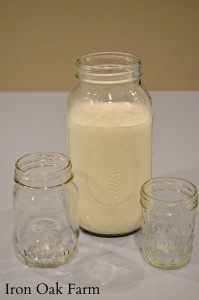 When our goats are in milk, we can potentially get over two gallons of milk per day. That’s a lot of milk for two people to consume. I’d love to sell it, but unfortunately milk laws being what they are, make that difficult.
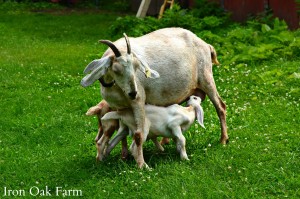 Over the years, I’ve tried to come up with ways to store the milk for times when the girls are weaned in preparation for their next freshening. To be honest, we’re kind of nonchalant about the whole dairy aspect of our farm. Most of the time we simply let the kids nurse until their hearts are content and only collect enough milk for me to make soap for the year and to stock the freezer with butter.
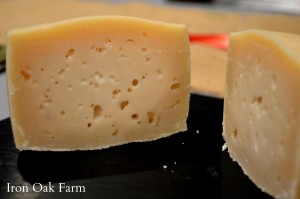 When the feeling strikes, we might make a few batches of cheese. We’ve made a pretty successful Swiss, a 1 year Parmesan, which was…ok, Mozzarella, a delicious Ricotta and lots of fresh Che’vre or Goat Farmer’s Cheese.
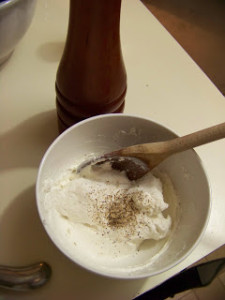 I love flavoring this with chives or basil from the garden, or fresh cracked pepper.
But making cheese takes time, something that Zach and I don’t always have a lot of. This farm still isn’t where it needs to be as far as large projects, so until we iron out some of the bigger wrinkles (fencing, garden beds, mending the siding on the big barn, building a hay elevator etc….) dairy production will take a back seat.
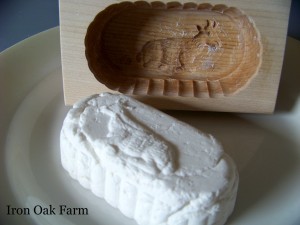 One thing I do try to make a point of is stocking up on butter. Butter is expensive to buy and we use a lot of it. I mostly cook with butter and olive oil, occasionally canola oil for frying potatoes etc.
And butter freezes well. The consistency stays true, as does the flavor.
Making butter from goat’s milk takes an additional step that cow’s milk doesn’t necessarily require.
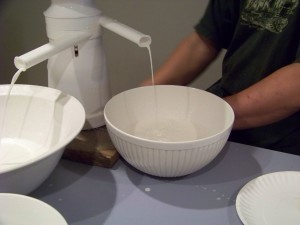 Goat’s milk is naturally homogenized, which means the cream is mixed into the milk. Cow’s milk will separate if left to sit, with a convenient layer of cream on the top. Goat cream must be manually separated using a cream separator. The hand crank machine uses centrifugal force to whip the cream from the milk.
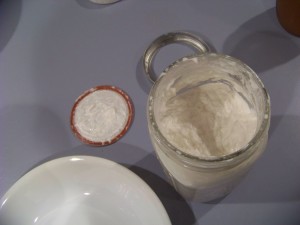 From here, I can shake the cream into butter, rinse off the butter milk and pack it into the freezer.
One of my favorite things to do is to flavor our fresh goat butter with items around our farm and give it away as gifts.
Finely chopped herbs and garlic make a delicious spread on toast or croutons.
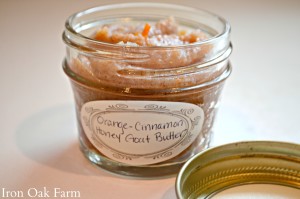
But the most popular butter that I make is our honey butter.
Many of our friends and family want to experience the taste and flavors of our farm. This multi-ingredient item gives them a sampling of both our bees and our goats.
If I throw in a few zucchini and a dozen eggs, it really rounds out the visit.
This butter is incredibly simple to make and can easily be made with store-bought cow butter.
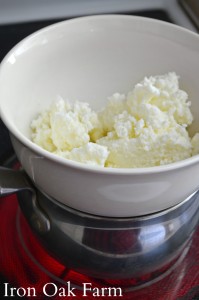 In a double boiler set to low, melt the butter. You can determine the amount based on the jars you plan to fill.
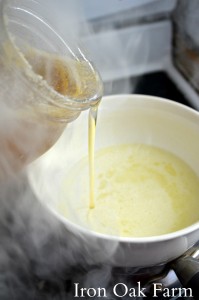 When butter is melted, add the honey at a 1-4 ratio. 1 part honey to 4 parts butter. You can experiment with this ratio. More honey will obviously make the butter sweeter, and the consistency more creamy.
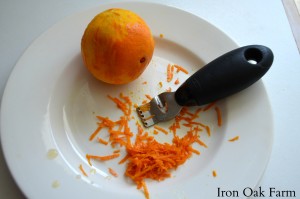 Then add desired flavor. (Ideas listed below)
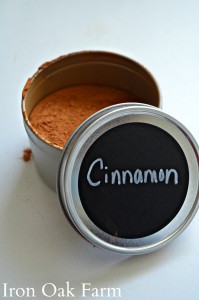 Stir until the honey is incorporated into the butter.
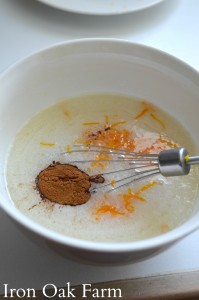 Remove from boiler and pour into a jar.
Let cool.
Flavor Ideas!
This mixture of honey and butter is delicious on its own, spread on biscuits, scones, toast or English muffins, but you can make it even more special by adding extra flavor ingredients.
Cinnamon or pumpkin pie spice– Add a pinch at a time and taste often. You may have to give the finished butter a few stirs as it cools to incorporate the powdered spice throughout.
Orange or lemon rind- I use this peeling tool to create long strands of peel. You can chop the strands smaller, but I like the way the curls look in the finished butter. The longer you let the citrus sit in the warm, melted butter, the more flavor you will extract.
Mashed berries- Mash fresh strawberries or raspberries and add them to the butter and honey. Not only will it taste delicious, but the color will be a beautiful pink.
Sweet loving herbs- Mint (my favorite-Chocolate Mint) Lemon Balm, or even Lavender give an interesting flavor to the sweet honey-butter mixture.
Cocoa- Mix in a bit of dark cocoa powder to make a sweet-buttery chocolate spread. You could even add some mashed strawberries for an extra something.
Vanilla Bean- Split a vanilla bean in half lengthwise and use the side of a knife to scrape out the vanilla beans. Add that to the butter and honey…it’s heavenly!
Flavors and extracts- I prefer to use natural flavorings but store bought extracts found in the baking aisle could also be used. I would recommend a drop at a time, a thorough stir then taste.
Mix it Up!- Take the suggested flavors from above and mix them together to make it even more interesting.
Orange-vanilla
Cinnamon-orange
Cocoa-mint
Cinnamon-vanilla
Lemon-berry
It’s a fun, easy recipe to experiment with, and a great way to share your honey harvest other than the traditional jar. Give it a try!
.






2 Comments
What kind of cream seperator do you use and where can it be purchased?
Go to amazon.com the separator is under 200.00