
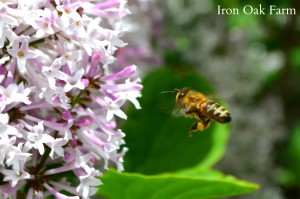
 The mating ritual of bees is amazing. Mating takes place up to a mile away from the hive and sometimes 300 feet in the air. The young queen takes her virgin flight to meet with a swarm of drones willing to end their lives just to mate with her once. She will stay fertile for the rest of her life.
A hive is made of three types of bee.
There is the worker bee. They are the lifeblood of the hive. All workers are females. They collect nectar, draw up wax, make honey, care for the queen, feed the young, protect the hive and regulate temperature.
The second bee is the queen. There is one queen per hive. Her primary role is to mate and lay eggs. She is the largest bee in the colony and will only leave the hive to mate.
The third bee is the drone bee. These are the only male bees of the hive. Their only role in the colony is to mate with the queen.
The queen bee and the drones have a very interesting relationship.
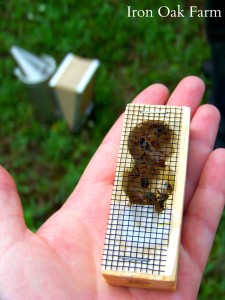 The Queen
Though the queen will take several mating flights as a young bee, these few trips will be the only time she leaves the hive for the rest of her life. She will store millions of sperm inside her and this will fertilize all her eggs. And she has a lot! Sometimes she will lay up to 2000 eggs a day and she can live up to 5 years.
The drones from neighboring beehives will collect in swarms in the sky about 200 to 300 feet in the air. The queen sets out for her mating flight and the drone swarm finds her. The drones use their large eyes to spot the queen. The queen will mate with several drones, around 10 to 20. This variety of mates helps to change up the genetics of future offspring.
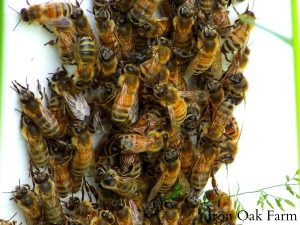 The Drone
A drone has a rather interesting and sad life. Drones are born from an unfertilized egg. This can happen in two ways. Either a worker bee (which will never mate) lays an unfertilized egg, or the queen lays an egg that isn’t fertilized by chance. Because of this, the drones have a different number of chromosomes than the female bees.
Drones are the only male bees in the hive. Drones are larger than worker bees but not as large as the queen. They have a plump abdomen and have very large eyes used to spot the queen during mating. They cannot sting. They do not produce honey, or draw wax. Drones must be fed and cared for by worker bees.
Really, drones only have one useful role in the hive (besides helping to regulate temperature like every bee) and that is to mate with a queen. Drones don’t necessarily mate with their own queen, but instead, they gather outside the hive with other drones from neighboring colonies.
It’s like a mating meeting place.
Drones collect in mating swarms up to a mile away from the hive. They swarm about 200 to 300 feet in the air. They use their large eyes to scope out any queens that might be looking for a mate.
When they spot a queen bee, they attach themselves mid-flight and insert the sex organ. The drone’s reproductive organ is barbed. These barbs help him to stay attached to her during the flight. Unfortunately though, much like when a worker bee stings, when he detaches from the queen, the organ stays inside the queen and the organ is ripped away from the drone along with part of his abdomen. He dies shortly after mating. The next drone to mate with the queen will remove the organ and insert his own.
If a drone doesn’t meet his doom through the harsh results of mating then he will live only until the following autumn. When the cooler weather sets in, the worker bees will force the drones from the hive and they are left homeless, hungry, and eventually the cold takes them.
I found this amazing video that uses high speed cameras and mini helicopters to capture the mating flight of the queen bee. Check it out!






5 Comments
Sucks to be a drone.
I’ve had my hive three months and the queen is laying real good ports of brood. And pollen and lots of honey . probably to late for queen cells. I haven’t seen any yet .are there surtin times they make queens.??
Good information for a beginner like me. The video on mating was astounding! Bees are so beautiful
Hi Jennifer,
So they used mini helicopters to film the video. It would have been so confusing, if they had used a drone, to spy on drones.
These are great articles for new beekeepers. I have learned valuable info and I am greaful!! Thank you.