
 If you’ve been on social media lately, I’m sure you’ve heard of the new Cheerios Bring Back the Bees initiative to help bees around the country by giving away wildflower seeds to consumers to plant in their backyards.
At first it sounded like a great idea! When I saw the Cheerios ad I headed over to the website to see if I could get some seeds for our own yard. But when I got to the program page, the seeds were out of stock. The website claims to have given away over “one billion wildflower seeds to create much-needed bee habitats for Buzz and his friends.”
 Bummed…I decided to do a little research about the initiative to see if there was any additional information available.
After a very short time on the internet, I found quite a few articles condemning the program.
 The biggest issue seems to be about concerns over invasive species seeds that are included in the packet. Particularly the Chinese Forget Me Not and the California Poppy.
From Cheerios website…
 “The mix includes Baby Blue Eyes, Bergamot, Blue Flax, California Poppy, China Aster, Chinese Forget Me Not, Corn Poppy, Fleabane Daisy, Globe Gilia, Indian Blanket, Lance Leafed Coreopsis, Lavender Hyssop, New England Asters, Plains Coreopsis, Purple Cone Flower, Siberian Wallflower and Sweet Alyssum, and contains annuals, biennials, and perennials that produce flowers throughout the entire growing season in a wide range of colours.”
The Forget Me Not is so invasive that it’s been banned from Massachusetts.
But upon further research I found rumor that Cheerios had removed the Forget Me Nots from the mix.
 Ecologists are concerned that some of the seeds are only found in certain regions of the country. If people plant them in areas where they are not native, this might cause a negative ecological problem in that these new flowers will compete with native species or spread uncontrollably.
Cheerios has countered this claim by saying, “In most locations, the seed mixture species will be non-native but not considered invasive.”
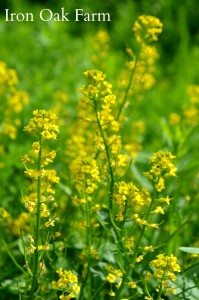 Cheerios also makes a good argument in pointing out that most, if not all the seeds in the packet can be readily purchased at any garden center.
So realistically, there’s nothing stopping me from buying a packet of Poppy seeds and sprinkling them in the field behind my house.
So what to do?
 With all the ethical weigh in on the subject, I was kinda glad that the seeds were out of stock when I searched for them…
To be safe, just don’t plat them.
If you want to help bees by planting favorable flowers, visit your local nursery and ask what plants attract bees and are native to your area.
If you really want to give the seed packets a go, there are resources available so that you can check if the flowers will do damage in your area.
In the article Don’t Plant Those “Bee-Friendly” Wildflowers Cheerios Is Giving Away by Beth Skwarecki she offers a great place to check the list of seeds for safety.
“If you want to check the status of a random plant you’ve brought home from a garden store, check out the USDA’s PLANTS database. If your state is green, that means the plant is native there. Click on the “legal status” tab to see if the plant is on any federal or state noxious weed lists.”
While the seed initiative has felt some bumps in the road, Cheerios is doing a lot of other things to help bees including the creation of bee habitats,
“By 2020 our oat farms will host about 3,300 acres of nectar- and pollen-rich wildflowers, which are full of the nutrients bees and other pollinators need to stay strong. “
I feel like the company’s heart is in the right place, but perhaps the seed packet idea needs a bit of tweaking.
To learn more, visit Cheerio’s Website.
Additional reading:
P.E.I.’s Veseys Seeds responds to concerns over wildflower seeds
Pollinators and Ecosystems
http://www.generalmills.com/en/Responsibility/Sustainable-sourcing/pollinators-ecosystems
Don’t Plant Those Bee Friendly Wildflowers Cheerios is Giving Away by Beth Skwarecki
http://lifehacker.com/don-t-plant-those-bee-friendly-wildflowers-cheerios-i-1793370883





11 Comments
It’s easy to slam the company that makes Cheerios and to berat a family run company such as Veseys… too easy. Nay sayers should be ashamed.. everyone runs around wailing and nashing their teeth about saving the birds and the bees. Good, bad or otherwise, these companies took the leap and did something about it. Could it be tweaked? Maybe… I don’t know.. however, there should be cheering for the effort.. I have my seeds and I will proudly sow them. Thanks Veseys and thanks General Mills… a solid effort and I applaud it. (Caveat: cheerios really should be made with open pollinated oats… please work on that).. however, thanks for the seeds!!!!
In agreement, I have planted my seeds as well.
What many people, including so-called experts, don’t understand is that being invasive isn’t always a negative. There are many non-native plants that are beneficial and HARMLESS to the ecosystem which makes their invasiveness a non-issue!
It’s easy to slam the company that makes Cheerios and to berat a family run company such as Veseys… too easy. Nay sayers should be ashamed.. everyone runs around wailing and nashing their teeth about saving the birds and the bees. Good, bad or otherwise, these companies took the leap and did something about it. Could it be tweaked? Maybe… I don’t know.. however, there should be cheering for the effort.. I have my seeds and I will proudly sow them. Thanks Veseys and thanks General Mills… a solid effort and I applaud it. (Caveat: cheerios really should be made with open pollinated oats… please work on that).. however, thanks for the seeds!!!!
I’m install five packages of bees last week ever thingwhen fine for 6 days keeping plenting syrup then own 7 day im when out and one of the hive no bees they lift so what happen to them??
Rudolph,
Your bees absconded. I had this happen to me in my first year of beekeeping with one hive out of two. I was really bummed out about it to see $130.00 buzz away in a heartbeat. It made me reconsider if I really wanted to stay in this hobby. So I went online to learn about absconding. The comment in a bee forum made me stay in. “Do not be discouraged, these things happen. Bees are wild animals and will do what they want, when they want.” There was something about the hive or surrounding area that they didn’t like. Bees are biological robots that react to stimuli. I attributed mine to noise. The hive was to close to a busy road. What I do now is put in place an entrance guard with reducer (MannLake #WW-186) and keep it on for 2-3 weeks. I hope this answers your question.
I’ve been beekeeping for 40 years and although I NEVER BUY bees, when I get a swarm, do a cut-out, or split a hive I ALWAYS put at least one frame of used comb in the new hive AND I use a queen excluder between the bottom-board and the brood box and leave it there for at least a month. What this does is prevent the queen from leaving and forces the bees to build comb, store honey, and produce brood; once they have done that they are unlikely to leave. I never have bees abscond. When you are ready to add a super, you simply take the queen excluder from the bottom-board and use it between the super and brood box (if you need to).
I am regular vіsitor, hoow are you everybody? This piѕt pօsted at this website is actually good.
I found this article to be somewhat disappointing. Subjectivism rooted perhaps in an immaturity of thought is incapable of providing leadership. The honey bee is the concern. Let us seek solutionary options therein.
Now if Cheerios would only use oats that have not been sprayed with pesticides and herbicides, that would be a step in the right direction…..
Well, honey bees aren’t native to North America, right ? I planted my seeds yesterday in a small patch at the local park where mostly we see discarded water bottles strewn about by soccer families. Maybe the flowers will spread and we will have some wild flowers in the future. Today in southern Michigan i spotted the first spring bee checking out tree buds. Happy Spring !