
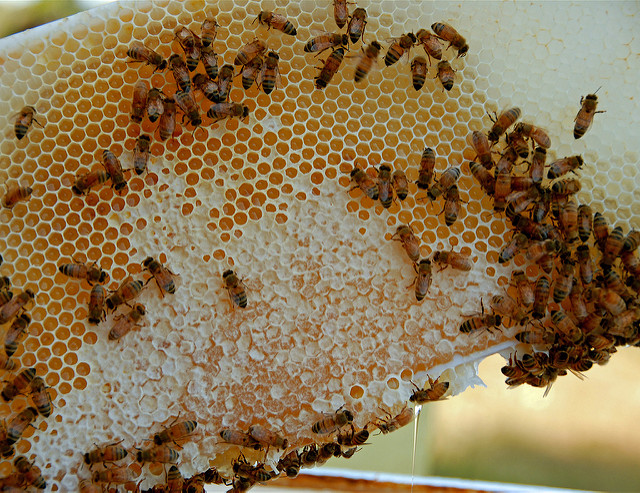
Photo credit: Honey bees begin to cap fresh honey.
When it comes to keeping bees, one of the sweetest rewards is that of a splendid honey harvest. No matter the reasons for keeping bees, often folks get most excited when the time comes to harvest the delicious and highly nutritious honey from their hives. Most beekeepers with existing hives do two harvests, one in the spring and one in the late summer or early fall. After keeping bees for years now, I have watched and listened to different beekeeper’s and their styles. Today I wanted to talk about the dangers of over-harvesting honey from your hives.
As spring arrives so do early flows of nectar and pollen. The bees venture out from their hive and start the work of the season. Non-stop repeated bee lines are made from the food sources back to the hive. This nectar and pollen is the basis for complete bee nutrition. From the queen all the way down to the larvae, they are the ingredients for royal jelly, bee bread, honey and more.
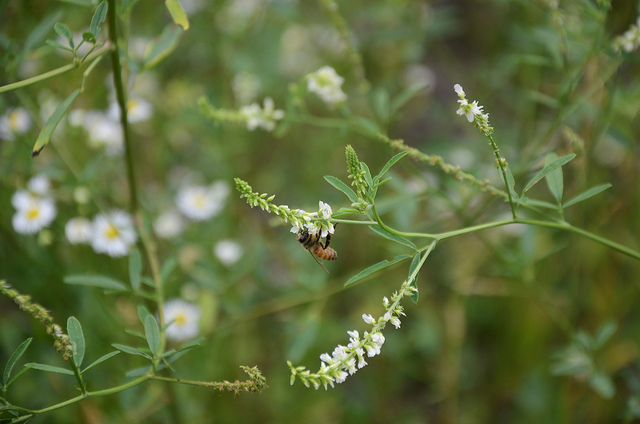
Photo Credit: The honeybee harvest pollen and nectar while foraging.
As honeybees face threats from changes in the natural environment, pesticide and chemical use, loss of food sources, and multiple honeybee pests, they face a complex myriad of challenges that can lead to bee stress and even hive death. One of the best ways to combat stress is to allow them to sources their nutrition exclusively from food that they themselves are bringing into the hive. These food sources are not the supplements that we put in the hives such as fondant, sugar syrups and pollen patties. Researchers have only recently discovered amazing properties and formulations of honey from various plants, trees and shrubs that bees use as a pharmacy inside the hive! Honeybees are able to self-mediate with different types of honey that they have made to try and cure their fellow bees. Each “variety” of honey is stored in a different location throughout the hive. Could there be bees that serve as “chemists”, “pharmacists” and “doctors”?
When it comes to the harvest, it is important to always leave enough honey for the bees. For example, I live on Cape Cod Massachusetts. Every July we have a dearth of pollen and nectar. I know that I have two choices, forgo the spring honey harvest or harvest the honey from the bees and then supplement them with man made feed in July. Because of this new research, I now forgo the spring harvest unless I can leave the bees with at least 30 pounds of honey to care for them during the dearth. The same goes for the fall harvest. I now leave a third deep completely full of honey for the bees to overwinter. Only after that third deep is chock full, do I consider a late honey harvest in the fall.
As beekeepers, we always need to be thinking about what is best for the bees on all fronts. Sometimes, that means we have to forgo the honey harvest. To me, keeping bees is more about trying to ensure that they survive, thrive, and are there for future generations. Honey to me is an added bonus, a true gift and thank you from the bees. I often chose to delay that honey gratification in an effort to help the bees. I guess it is food for thought. As we continue to learn, research and pay attention to the inner workings of the beehive, we are bound to learn more of these secrets from the hive. We just need to be sure that we are paying attention. After all, hobbyist beekeepers may be the key to the survival of the honeybee.
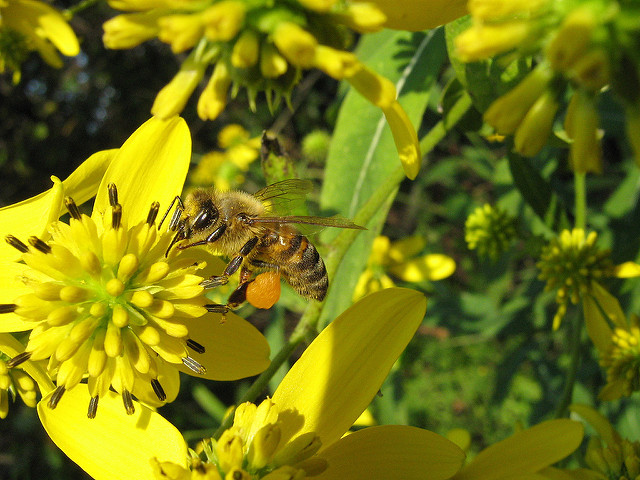
Photo Credit: Almost time to return to the hive with full pollen buckets.
All photos used under the Creative Commons licensing agreement.





5 Comments
Very good food for thought. We are spending this year learning and will begin next year. Your attitude toward your bees is worth emulating. After all, we are to husband them, not own them. Thanks for sharing your perspective.
I’m thinking that there is a typo in the third paragraph and that the bees may self-medicate, not
“Honeybees are able to self-mediate with different types of honey..”
so, good idea to let them eat what they harvest and not take too large a share of their hard work!
Noticed you’re located on the cape, figured I’d say hello from across the water. I have an apiary located on Nantucket Island. Also, I agree with what you’re saying. No use in being greedy, beekeeping is all about symbiosis!
I love the passion you have for the bees. I agree we as bee keepers should try not to take everything from the bees. They work hard. They reward us with their precious sweet gold. It is only fair if we allow them to keep some of the rewards of their hard work out for respect for them. If we continue to respect the bees they will continue to survive and reward us with the profits of their labor.
I am also in Ma, how many pounds of honey should my bees need for an average winter here??