
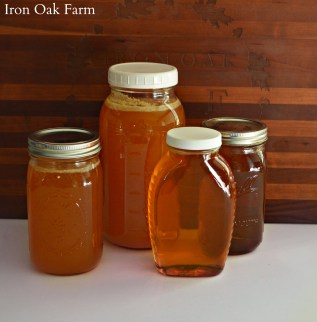
Sometimes it feels like you need to be a lawyer or a chemist to really understand what you’re buying from the grocery store. Wouldn’t it be nice if food was just food and we could read a label and take it at face value? Unfortunately, that is not the case.
In recent years, many companies have honed in on the consumer’s preference to turn back to farm-to-table type food. Advertising departments know that people prefer food that is all-natural, real, or pure, but since many of these labels don’t hold any legal weight, companies can pretty much slap them on the box of any Frankenfood. Due in part to vague labeling guidelines, there is a growing mistrust of our food system.
In the world of honey, it’s important to understand labels as well. Not only for your own knowledge as a customer, but as a beekeeper and seller of honey.
You want to make sure that your labeling system is transparent and clear, not only for customer satisfaction, but so you can charge appropriately. To help clear up any confusion, let’s dive into the different types of honey found in the market today.
Local Honey
The main benefit of local honey stems from the fact that it is produced by bees collecting from local flowers. Because of this, local honey can help eliminate seasonal allergy symptoms for people living in that area.
The idea is something like the science behind allergy shots. Small amounts of the pollen paired with the healing properties of honey, introduce small amounts of the allergens into the consumer’s system. The system builds up a tolerance and can cope without reaction.
So if this is what you’re after, then you need to find out where the honey is produced. You should also make sure that the honey is raw for maximum health benefits.
Raw Honey
Raw honey is just as it sounds. It is the liquid that comes straight from the hive. The honey is collected, the wax is strained off, and it is placed in jars and sold to consumers. Many times this type of honey will crystallize if it sits, which is nothing to worry about. The honey is still edible, it just means that the sugar content is high and has set off a chemical reaction reforming the sugar crystals. This also often happens in candy making. If you leave one unmelted sugar granule in a batch of hard candy, it can recrystallize the whole pot.
Raw honey also contains all of the nutrients and enzymes that makes honey beneficial to your health. In processed honey, much of these healing nutrients are eliminated.
Pure Honey
Pure honey is honey that has no additives like sugar, corn syrup, or water. Despite this, it has probably been pasteurized to make it more shelf stable. Pasteurization prevents fermentation and crystallization. Pasteurization, however, kills many of the beneficial properties of the honey.
Pure honey can also refer to the type of flower the honey comes from … such as lavender, clover, or manuka. This means that the honey has been produced from flowers purely of that plant type.
Natural Honey
In the food industry, the word natural means very little. There are no restrictions for the use of the word so honey that is labelled as natural can contain corn syrup, sugar, water, artificial flavor, colors and so on.
Knowing your beekeeper and buying from farmers’ markets or local vendors is always the best way to know exactly what you’re purchasing. Or better yet … if you’re not already a beekeeper, learn how you can keep your own backyard bees!





4 Comments
[…] At times it feels as you want to be a or even a chemist to produce a simple visit to the grocery shop. Could not it be nice when food was only food and we can see a tag and then accept it at face value? But unfortunately that’s not the situation. Recently a lot […] The article Neighborhood, Raw, Actual or Organic Honey? Appeared on Maintaining Backyard Bees…. Read More […]
This is really helpful! I thought raw is just the new marketing ‘it’ word. Why would anyone feel the need to preserve honey. It lasts forever.
I wish you would have also mentioned “organic” in more detail. Recently I was at a beekeepers meeting and there was a man there that had been selling “local/organic” honey for a few years. Interestingly, he is less than a mile from commercial farming and they use many weed killing sprays. I have always asked when beekeepers sell honey organically, how they can know that a range of over three miles in all directions of the hive are 100% organic. Isn’t this false advertising?
Your thoughts?
I am lucky enough to have a friend who is the best beekeeper in the world, producing the most wonderful honey. Wayne Perks of Horn Hill Apiaries, Acton, Maine raises his own bees with “love” and it results in the best raw, pure, natural honey we have ever tasted. He is extremely knowledgeable about all things “bees” and “honey” and can even tell why a particular batch of honey is darker or lighter. He is a hero for the way he is trying to save and protect the bee population for future generations, not to mention producing honey that is safe and healthy and that everyone should be using. A visit to his apiary is a MUST if you want to learn everything there is to know about bees and honey.