
It’s hard to believe that September is now upon us! Where did the summer go? Well, NOW is the time to start preparing your bees for late fall and winter. I wanted to share some things that will help you get your bees ready in time so they can ride out the cold weather that will be here before you know it. Plan on making an inspection soon and look for the following:
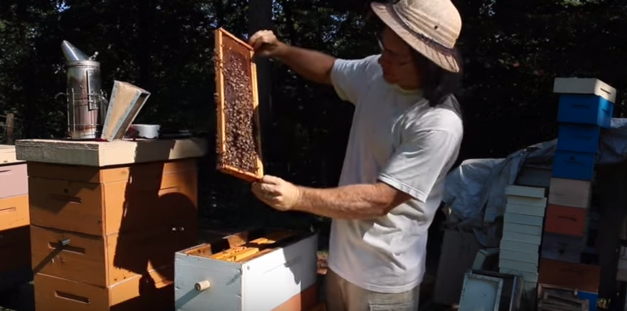
1. Check you honey stores. It takes one full super (8-medium frames) of hone where I live in the south to ride out a normal winter. This is approx 50 lbs of honey. Depending on where you live the winters may be colder and last longer, so you may want to plan on having at least two or more full supers of honey. Honey is the very best thing for bees to eat. Hopefully you had a great honey flow in your area this year and your bees have a good store of honey already. Perhaps you may be anticipating a fall honey flow where you live. That’s great! If not, you should plan on feeding now in order to help your bees get enough stores to last through winter. It is always best for bees to have their food stores already packed away and capped in their cells about a month before the cold temps set in. Because they cluster around the combs, this is how they generate warmth in winter. When there food supply is stored right at their fingertips so to speak, they can eat without breaking the cluster. Some folks use a candy board with success, but I prefer to keep the bees in their cluster. If you feed now, they’ll put the sugar where they want it.
2. Check to be sure you have a laying queen. If you do your inspection and see eggs, or very young larva just a day or two old – you have a queen. You do not have to keep looking unless you want to. You should also notice that you have some emerging brood. Likely these will be the bees that form the cluster to ride out the cold winter. Feeding a light hive this time of year will encourage them to raise more bees for this reason.
3. If you inspect your colony and find that you have a super that is nearly empty – no honey, no eggs or brood, just empty combs or nearly empty combs. Odds are you would be better to take it away from them and condense the colony into a smaller space. I had a few colonies that were 5 boxes tall that I condensed to just 3 boxes. The few partial honey frames were either used to boost some very small nucs, or left out for robber bees to take back. Then I’ll feed the 3 box hives for about 3 weeks and check them again to make sure they are heavy. The other benefit of condensing the amount of boxes is that it confines your bees to a smaller space and they can maintain heat better and cover more frames which keeps the pests away from the combs.
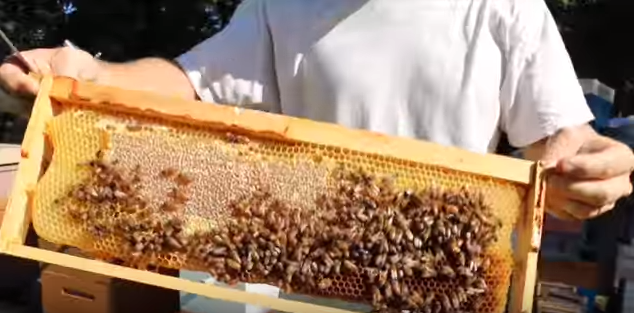
4. When feeding sugar syrup during the summer, and 1:1 ratio is fine, but in the cooler weather I would suggest a 2:1 or even 3:1 ratio meaning more sugar than water so that the syrup is thick like you get from a can of peaches. This way the bees do not have to work as hard to get the water content down to the consistency of honey, and since it’s cooler in the fall evaporation does not play a major role in this process. So thicker syrup is better now.
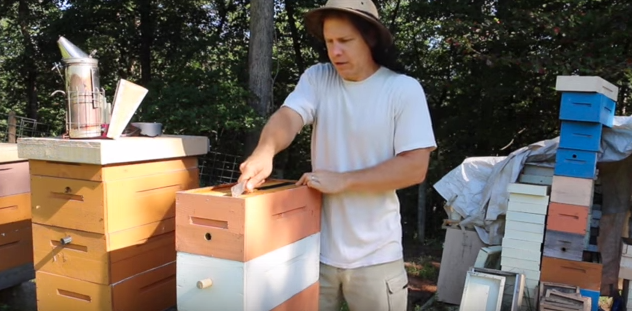
5. Consider drilling a 3/4 vent hole in your top super to allow moist air to escape. In winter, it’s excess moisture build up – not the actual cold temps, that kills more colonies.
So friends, take advantage of the remaining warm days ahead to help your bees get prepared for their winter vacation. You’ll have time to read up more and watch videos to continue
your beekeeping eduction. Find a mentor in your area, or even online. It seems like us beekeepers love to help each other out.






4 Comments
Thank you for the information. This will be my first winter for my bees. So…I am a novice bee keeper. I need all the experienced info I can get. I have a question, if you don’t mind. Where is the best place to drill a hole for th moisture release, which box and which side?
Again, thanks for the info.
Thank you for taking the time to create a great video on winter prep. This is my first winter and it was good to listen to a clear and nicely paced video.
Why can’t you put hives in a warmer spot in the Winter so they don’t freeze? Or just build an insulated house around them? Just expose them to the outside gradually during the day in the Spring. Thanks!
Can u feed bees home made maple syrup ??????