
 by Jennifer Sartell of Iron Oak Farm
When most people think of bee keeping, jars of glistening honey come to mind. And while there’s no argument that honey is perhaps one of the sweetest and immediate rewards of bee keeping, it should be considered that bees and other pollinators provide benefits on such a larger scale. It’s important to support pollinators of all kinds and we can do this by providing a variety of housing to not only Honey Bees but other species of pollinators as well.
Here are some interesting facts about pollinators provided by The NAPPC (North American Polinator Protection Campaign) and the Pollinator Partnership.
“Why does pollination matter to us?
• Worldwide, roughly 1,000 plants grown for food, beverages, fibers, spices, and medicines need to be pollinated by animals in order to produce the goods on which we depend.
• Foods and beverages produced with the help of pollinators include: apples, blueberries, chocolate, coffee, melons, peaches, potatoes, pumpkins, vanilla, almonds, and tequila.
• In the United States, pollination by honey bees, native bees, and other insects produces $40 billion worth of products annually.
Are pollinators in trouble?
• Worldwide there is disturbing evidence that pollinating animals have suffered from loss of habitat, chemical misuse, introduced and invasive plan and animal species, and diseases and parasites.
• Many pollinators are federally “listed species,” meaning that there is evidence of their disappearance in natural areas.
• The U.S. has lost over 50% of its managed honeybee colonies over the past 10 years.
• A lack of research has hindered our knowledge about the status of pollinators. The E.U. has been so concerned that they have invested over $20 million investigating the status of pollinators in Europe.”
https://pollinator.org/pollination.htm
So as you can see pollinators of all kinds are important to the us, our food production, the production of medicines and the natural balance of the food chain. For those of you who want to support pollinators, but perhaps don’t want to get involved in the whole honey extraction process, here are a few alternative hive options that might interest you.
Honey Bees Hives for Pollination and Conservation
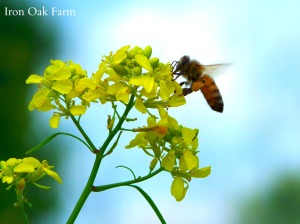 Gaia Bees makes several alternative hives meant to support the health and well being of bees. “The designs are based on the needs of the bees and promote a sustainable and wholesome approach to apiculture.”
One design is the Sun Hive.
The sun hive is a type of skep hive. A skep is a bee hive made from coiled straw and stitched together using cane. Skeps used for honey production are now illegal because the hive must be destroyed to harvest the honey. But if you have no intention of harvesting from the bees, a Sun Hive like this one creates a wonderful, permanent home for a colony. Not only is this hive beautiful, but it mimics the natural hive structure that wild bees create.
Gaia holds classes to teach people how to make a sun hive. Visit their website for more information.

The Sun Hive Photo Credit Gaia Bees
 Bumblebees
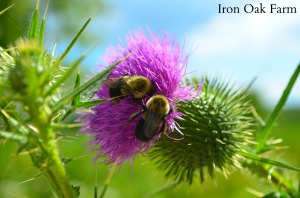
There are many species of insects that help pollination. Honey Bees get a lot of attention as pollinators because backyard bee keepers have the added benefit of the honey harvest. So it’s a dual purpose enterprise. But if you’re just looking for increased pollination Bumblebees out-pollinate their Honey Bee cousins.
“Bumblebees are excellent for tomato growers.
They visit twice as many flowers per minute as honeybees.
They carry heavier loads.
Their larger size means better contact with stamens and pistils.
They do well in greenhouses.
They stay active in harsher weather.
They cross pollinate fruit trees more easily because they don’t stay within a particular crop like honey bees.”
~Arbico Organics

Bumble Bee Hive Photo Credit: Arbico Organics
You can support bumble bees by installing a Bumblebee Hive like this one from Arbico Organics.
Or, you can make your own Bumblebee hive using a flower pot and a few items around the house. Find instructions at the Bumblebee Conservation Trust.

Mason Bees Photo Credit: Wikipedia
Mason Bees
I’ve personally used a Mason Bee hive in our garden. It’s interesting to see the little tubes fill up as the female does her job as nest keeper, and they are great pollinators!
“Each Mason Bee visits as many as 1000 blooms per day — 20 times as many as a honeybee!”
Not only are Mason bees better at pollinating than Honey Bees, but they don’t sting! This is a great alternative for gardeners who have severe allergic reactions to bee stings.

Mason Bee Hive Photo Credit: Gardener’s Supply Company
There are many designs available for Mason Bee Hives. This one from Gardener’s Supply Company is cute and reasonably priced.
Simply hang in a sunny spot and reap the rewards of additional pollinators in your garden.
What are some things that you do in your own backyard to support pollinator?. Share it with the community by leaving a comment below, or visiting the Keeping Backyard Bees Facebook Page.






10 Comments
I had peeled some apples and put the peelings out for the birds and squirrels. It rained and the birdbath was full of water and apple peelings. When I went out to check i found about a dozen honeybees just having a dinner on the peelings and water! I will try to keep water and fruit out for them. They seemed to be enjoying it!
I plan on starting a few honeybee colonies this year. Can these bees coexist in the same close vicinity with two colonies?
For two years I had bees who came to my porch apparently for water. I first noticed them when the kept visiting the cats’ water bowl. I had a large hollow rock which ha broken in half so I started keeping it filled with water. They soon began to drink from this sxclusively. I never knew that bees required water, but this apparently wild hive of bees came everyday, drank and flew off always in the same direction’. Sadly, they did not return last year. I can’t know if the hive died or if lifting of the droughty condions in in TX made water more available.
Could somone tell me whether red wasps might have driven them off ?
can Mason bees share space with regular honey bees ? ( I have 1/2 acre, which i’m planting more flowers?clover/etc each year)
No problem. I’ve got horny, mason, and tons of bumble all living in my yard.
Looking for answers: Am considering putting in the Mason Bee. I live in the high desert of California, in the summer, 100 degree temps are the norm. How can the Mason Bee endure this temp extreme?? Seeking prolific pollinators for vegetables and flowers, open to suggestions please?!? — Henry
Mason bees emerge in the spring, depending on where you are they start to fly in 55+ weather and fly as adults for 4-6 weeks. Leafcutter bees finish developing in warmer temps and start to fly in 70-75+F weather so they are summer pollinators. You can get both types of bees from Crown Bees.
Mason bees need to live in cavities of the right diameter and the house offered by Gardener’s Supply is not a good long-term choice. The soft outer material is not rain-proof and mold will grow. The bamboo reeds are not consistent sizes and you can’t open the reeds without harming the cocoons. Nesting material should be opened and inspected at the end of the season in order to remove pollen mites and remove other signs of pests.
I have purchased the mason bee hive you have pictured here. I need instructions on hanging it. How high should it be hung and is it important to face any particular direction? Would appreciate your response. Thank you. Lois
I just started hives this summer and let my back yard grow into a meadow instead of mowing to see what wild flowers would grow for the bees. Not only was there plenty more flowers that the bees seem to take to but there was lots of milkweed and I saw monarchs again after years of not seeing them. I have found that there are so many “weeds” that turned out to be beautiful wildflower.