
 Guest post by Melissa Davenport
Our family began beekeeping April of this year, and we continue to learn about and be amazed by these tiny creatures. But when it comes to beekeeping, some lessons you have to learn the hard way!
We noticed around August that one of our three hives was not as active outside of the hive as the others, but we were amazed by their honey production.
The brood looked a little different than the other hives, kind of sporadic and not as much as the other hives. So, I decided to seek some help from a local beekeeper. We learned that the brood in this less-active hive was all drone, and that we were missing a queen. We had a queenless hive! We don’t know how long we were queenless, but a worker took over and began laying the drone brood.
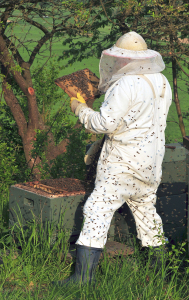
Here’s what to do if you’re experiencing this same issue: We had to move the hive away from the others, brush every single honeybee off the frames, and move the empty hive back to its original location. The beekeeper told us that we had to make sure the frames were free of all bees because the laying worker would not be able to find her way back to the hive as she had never been outside the hive. This also prevents her from continuing to lay drone brood. After the frames were emptied of bees and the hive was returned, the other bees worked their way back to the empty hive and we were able to requeen. We also took a brood frame from one of the other hives to help keep things going.
If you’re queenless but your issue seems different, check out Our Queen Bee Went Missing?!.






6 Comments
Hello:
First: Happy Valentine for all
I love sharing my experience in Syria:
If the queen died of the cell, we get a second cell of the framework brood (contains suppress contains a virgin) after guest bees brushing him and put the first cell and the bees do the work remaining ..
I was wondering if you have ever heard of a quean not laying. She is in the hive, and has stoped ! She has room To lay but no eggs!
This article is in fact misinformation, it has been proven that shaking bees at any distance from hive when laying workers are present while it will help beekeeper channel frustration does not eliminate laying workers from hive. James Tew just did a big study on this, the laying workers can fly, they are not too heavy due to ovary development, and they are older workers whom in fact do know their way back to the hive. Best solution is to combine/unite this hive with and strong queen right colony and problem will resolve itself. If you attempt to requeen that colony those laying workers that you thought you were rid of will ball that new queen. It was previously thought that it was the queen pheromone that suppressed ovary production in worker bees. It has been found that it is actually the pheromones produced by open brood that suppresses this reaction. The other findings are that at any given time even in queen right colonies there are laying workers present. The difference being with open brood present the other workers will remove and eat eggs laid in cells by laying workers. That’s why if a colony goes queen less and it is caught quickly giving a frame of open brood will continue to by you time suppressing the laying workers short term until you requeen it with a mated queen.
I catch a swarm last mounth ,and i found out its queen has gone with the wind…so i gave it a frame full of eggs …but bees did not accept…is there any way ?!
You said you “were able to requeen”…how did you do that? Did you introduce a new queen or try to get them to make a new queen? I had the exact same situation. I tried to move frames over from my other good hive. I tried four times with no result of a new queen. I put the last frame from the good hive into the queenless hive on 9/17 and saw a queen cell on 9/22. During the inspection last night it looked like the two queen cells did not hatch…not sure what to do from here? Also, when i checked last night, I didn’t see any new brood or see a maiden queen?
I followed the same steps. I think the hardest part was that a small swarm with the laying worker clustered on my near by garden bench. I shook off the bench and moved it. The swarm continued on the ground. I could not get the loyal bees to abandon the laying worker. Finally, we had a good rain and guess the swarm died. I found it distressing. But my new queen is doing well. The hive has calmed down and I have lots of brood!