
The varroa destructor. An external parasite much like a tick, which attaches itself to its host, an adult honeybee or developing bee larvae, and feeds on the hemolymph. The results are deformed bees, reduced lifespan and possibly death to the
colony. Would you know a varroa mite if you saw one? What would you do about them?
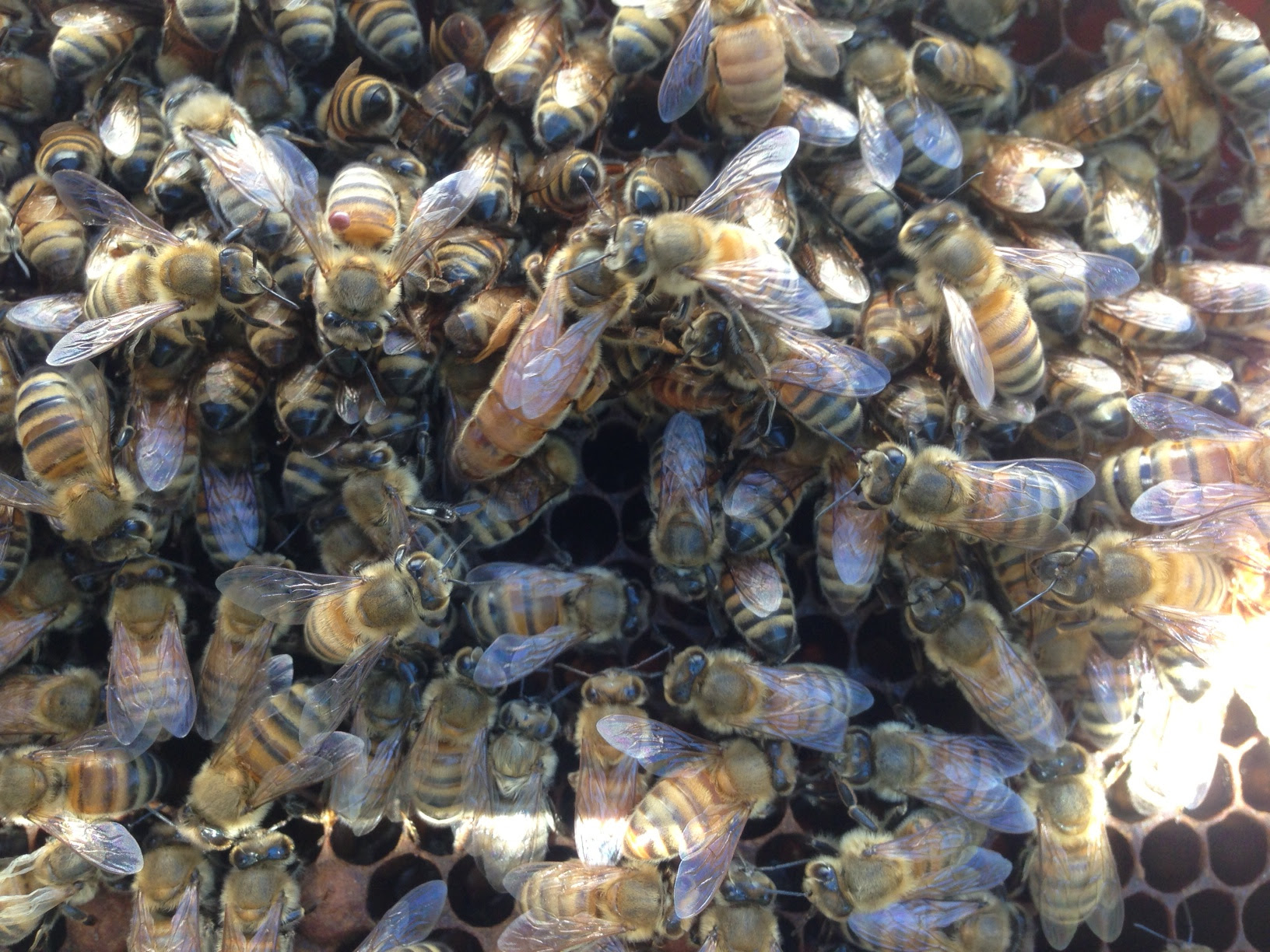
In April 2014, I found one of my swarm Nucs struggling. I observed dead bees on the porch and saw a drone with severely damaged wings. The worker bees were wandering around like they were sick. I checked the drone with the damaged wings and found a varroa attached to it. I went into the hive and found more damaged drones and observed mites on some of the wandering sick bees.
Not wanting to use chemicals to treat my hives, I use what I consider to be natural options. These are the methods I use and my understanding of how they work.
- Food grade mineral oil in a propane fogger – the mineral oil coats the bees and mites causing the bees to groom each other and the mites to fall off
- Powdered sugar – the powdered sugar works in effect like the mineral oil
- Sacrificial drone brood – Varroa mites seem to prefer drone brood for the longer incubation time. Removing the capped drone brood removes a lot of mites.
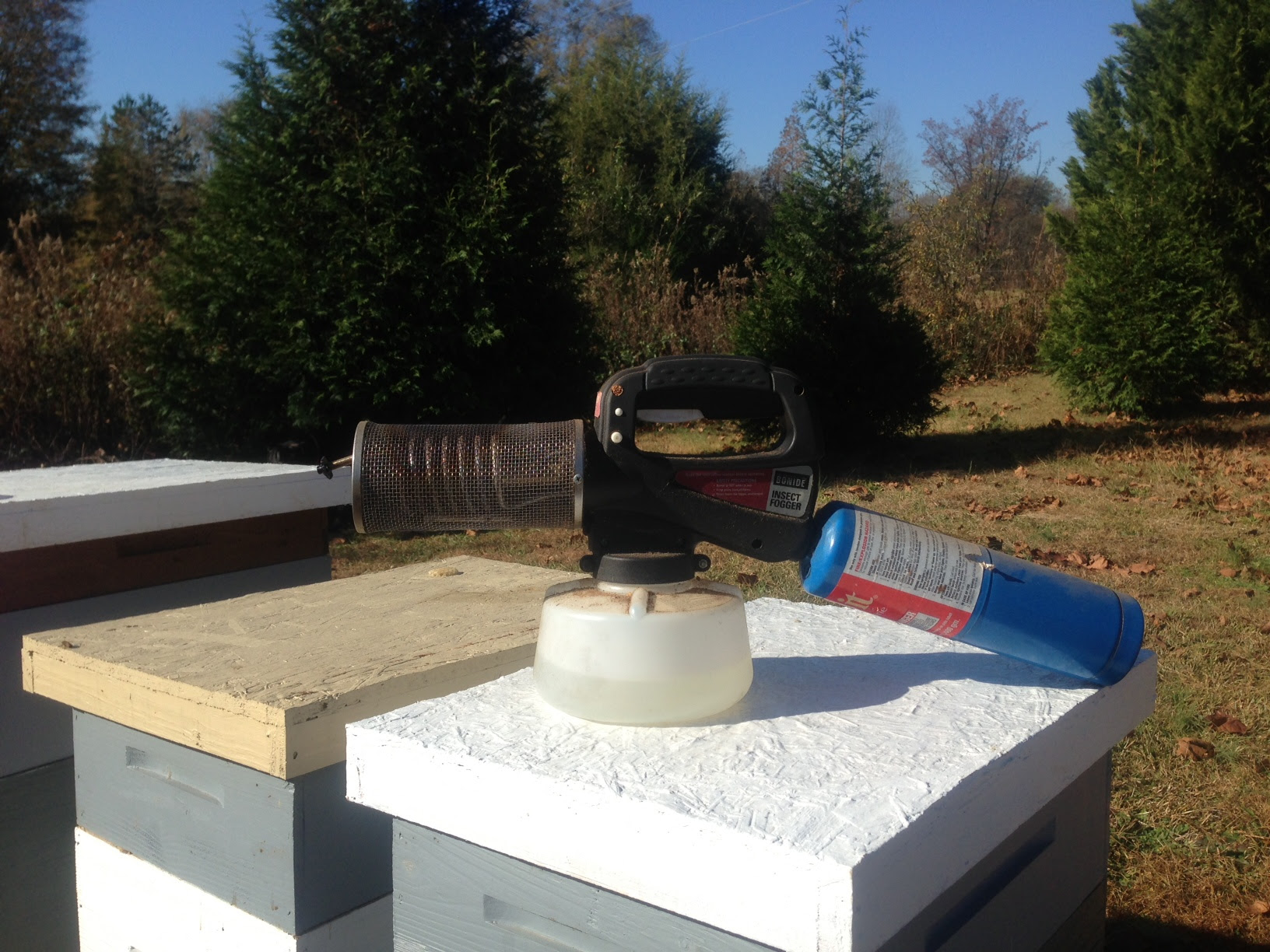
This is my approach to treating this hive:
I used the powdered sugar method right then, and I cut out the drone brood. I put the frames from which I had cut the brood back into the hive. Maybe I shouldn’t have done that but….my reasoning was that there were honey stores on the frames and the bees would eventually make natural comb from the wax already there (and make them with natural sized cells for drones). The next day, I treated with the mineral oil fog. I worried this was over-doing things a bit, but it is what it is. This hive struggled for a long time, but it did survive. Today, that hive is one of my strongest hives.
Fast forward to fall 2014. About the first of October, I took a hands-off approach after the honey harvest to allow the bees to take advantage of the awesome fall pollen/nectar flow that we had in Northeast Georgia. When I inspected again, I found three hives that weren’t where I wanted them to be. I decided to close them up and give them a day or two and think about what I wanted to do about them.
When I inspect a hive, I am looking for eggs, larva, pollen, honey, etc. Oh, of course, I am looking for the queen, and when I find her, I like to take pictures! When I inspected the hives, I took three or four pictures of one of the queens with my cell phone.
I had my phone out a couple of nights ago and was zooming in on the queen when I noticed something horrible. Varroa mites riding on at least two of my bees. Two mights may not be an epidemic but they are two to many.
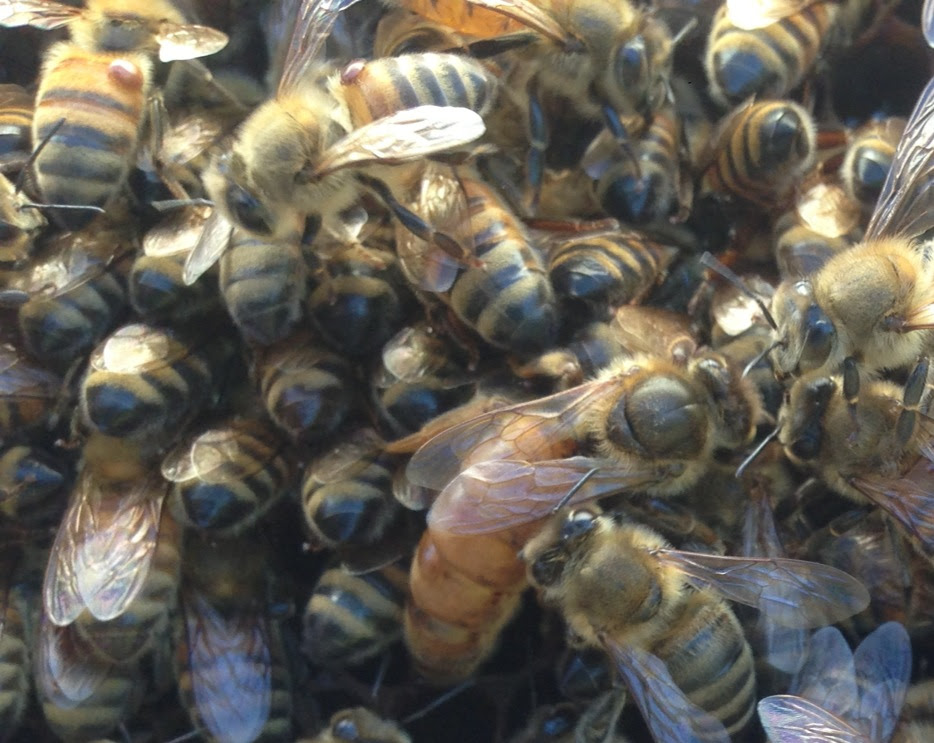
I confess to getting slack with treating my hives when I adopted the hands-off policy this year. I may have made things harder on my fuzzy friends for the winter. Thankfully though, I had already started treating with the MOF again before I saw the mites on those bees in the picture. It doesn’t seem to be an epidemic at the moment, but I will definitely be keeping a close eye on things.
No two years are the same in a bee yard. I anxiously await the spring!






21 Comments
I am looking to start beekeeping this spring and find these articles extremely informative and I’m sure will prove to be useful in my future beekeeping adventure.
Thank you =D
I’m interested in learning more about mineral oil fogging. Can anyone point to me to some reputable links for more info and exactly how-to?
Look under fatberman fogging. There are a few different ways he fogs. Also look him up for fogging with wintergreen essential oils to kill mites.
Also a good deterant is to use a imp board with an oil tray on the bottom with. #8 hardware cloth screen above. Does a good job of helping keeping SHB and mites in check. Usually after fogging the mites will fall down into tray and suffocate in the oil. I use mineral oil in tray.
Diatamacios earth in the tray under SBB after powder sugar or MOF works really well and noticed that any vegetable oils are attracting SHB . The cd cases painted black, roach poison boric acid small piece of comb. with with honey mixed works great. One in bottom and one on top. Ox acid after fall honey pull with vaporizer one time a week for well we do four weeks. Spring and summer MOF one time a month. Good Luck.
this fall i bought mites to put in my hives 13 got them and 6 did not i can’t wait till the spring to see if there is a difference in the varroa count between the to sets
Great idea using the sugar… I don’t like using chemicals if I can avoid them.
I like the idea of using sugar rather than oil. How do I apply sugar to the bees and how often should I reapply?
Thanks,
Rudy
My Bees left after 3 years suddenly and were replaced by Wax Moths and tiny ants which completely trashed everything. Yes the weather has been awful in upstate NY for bees and gardens. Heartbroken and don’t know if I will try again.
In looking at the second photo, I see the mite at the top left corner and on the bee in the center top but in viewing the Queen it appears that there might be a mite on the left side of her abdomen — are my eyes playing tricks on me? If it is a mite on the queen perhaps a more aggressive mite reduction strategy is called for?
thank your a great article as I’m a newbie and learn by your experience!
Not sure this is good article to post. A lot of innovation in terms of treating varroa mites has occured since 2014. use of organic acids is considered safe and useable during the honey flow. Formic acid treats the hive and capped brood while oxalic kills pherotic mites and is used in times with no capped brood. The use of fogged oil and powdered sugar have much lower success (mite removal) success.
Great articles, thank you
[…] proactive with mite control methods. Once we are seeing evidence of mite damage, it may be too late. (i.e. deformed wings, […]
When I first heard about sacrificing drone brood to you control Verona mites, I was thrilled. It seemed perfect: No pesticides, and a really substantial reduction in mites!!
But then I remembered the college classes that I took in genetics, entomology, integrated pest management and biology. After thinking about it I just won’t do it.
The reason I came to this conclusion is the drones are the primary mechanism that healthy bees have to extend their genetics into the gene pool and allow the bees to evolve gradually to be resistant to pest and disease pressures, thereby adapting to the changing circumstances they face. If we kill off the male bees during mating season, we will completely undermine bees natural mechanism to adapt and evolve. I’m still really sad that this seemingly innocuous method of drone trapping has the power to slowly muscle bees into a weaker and weaker species. After a lot of consideration, reading, and failed experiments, I have settled on using oxalic acid vapor (Varrox) at the recommended dose, but less often than suggested. I allow some loss of productivity and hives to mite stress so the bees can adapt.
I continuing to read about both strengthening bees and controlling pests. I am open to changing my method as new knowledge becomes available, but I strongly believe killing off male bees in volume is a kamikaze approach.
Rhubarb has oxalic acid in the leaves doesn’t it? What about putting some inside of the hives?
Here’s an answer to your question from bee expert Becky Tipton:
Re rhubarb for oxalic acid in hives: You are correct, there is oxalic acid in rhubarb and I have heard several people ask this question and heard it answered by a real scientist so I will paraphrase her answer here: To get the amount of oxalic acid comparable to an application dose, you would need to have bushels of rhubarb leaves in your hive—just not a practical application. It would be a little like saying penicillin comes from orange peel mold so I’m going to eat this moldy orange because I have an infection. Just not the same. I’ve also known of people considering planting rhubarb around their hives. There is no attractive bloom on the rhubarb to attract the honey bee and they will likely ignore the plants just like most other non flowering plants. If you choose to add rhubarb leaves to your hive, the bees will probably carry them out of the hive instead of preforming other housekeeping tasks. There is no scientific data to support this idea.
For an honest, scientific evaluation in the strategies presented here and the best options for healthy bees, check out http://www.honeybeehealthcoalition.org. They have an awesome free download of treatment choices, strategies for IPM, and how and when to treat for best results. They have scientific studies showing what works and what’s a myth.
This is just what I’m looking for! I’m into Organics and I’m a chef by trade and also a hobby bee keeper.
Thank you for your wonderful information.
Heath Bashford.
My backyard bee’s are looking sick and dying, some with deformed wings, any suggestions what I can do?
My backyard bee’s are looking sick and dying, some with deformed wings, any suggestions what I can do?
Thank you all very much I didn’t expect such a quick response, I will get onto this with confidents now