
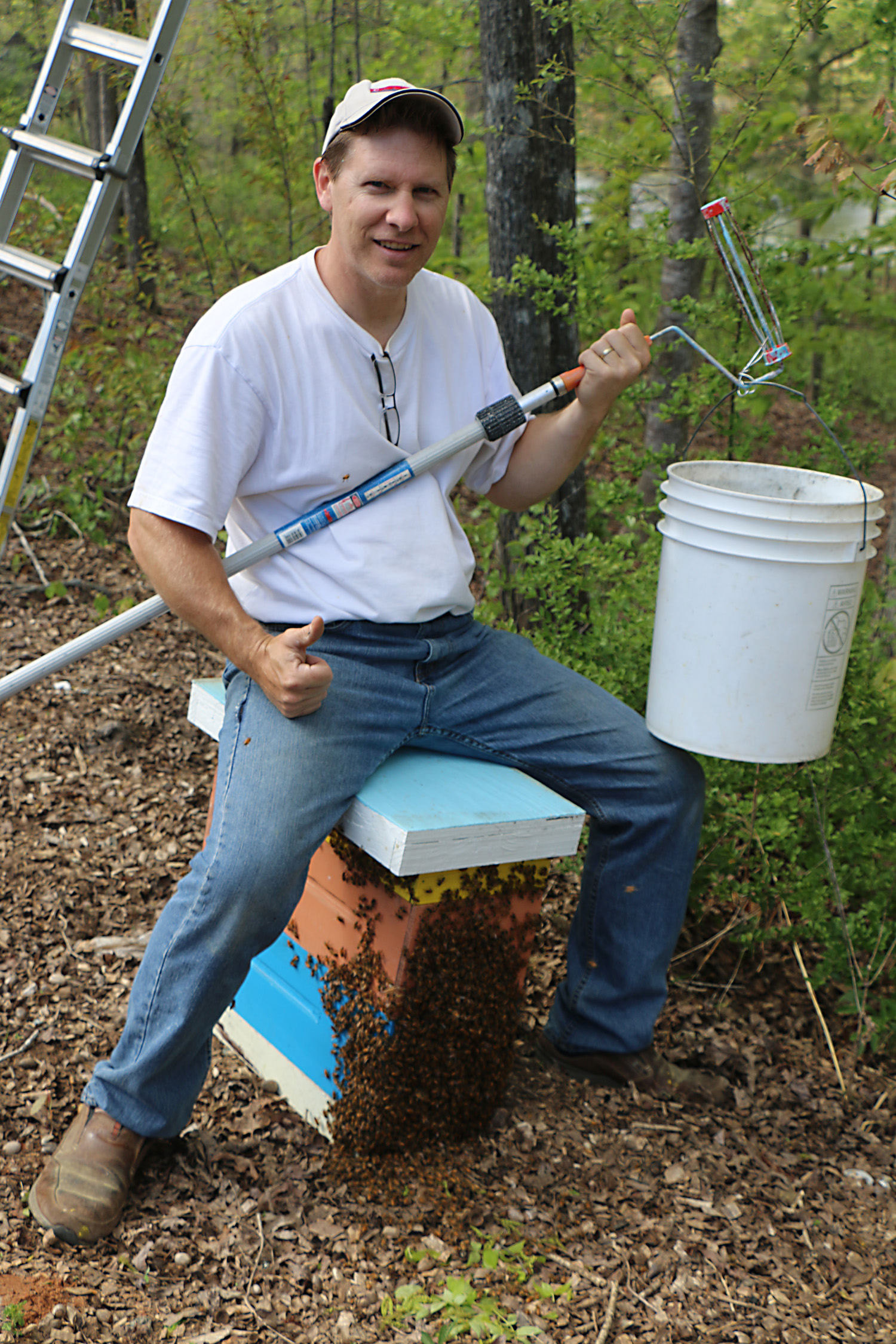
 Catching a swarm is a total blast. There’s nothing quite like the feeling of getting some wild bees for free. You just gotta get a little courageous and suit up to your comfort level and go get ‘em. It’s always great when they are on a branch 4’ – 5’ off the ground and easy to get to. But sometimes they are just a bit too far out of reach on a branch 15 – 20 feet off the ground. Not to worry – here’s a neat little tip that might just get you a few extra bees this spring using some items that you may have in your garage.
You’ll need a 5 gallon bucket and an extender handle for a paint roller. You can also use a pool skimmer handle. These handles generally extend about 12 – 15 feet, so you can get those swarms that are up in tree branches that are too high or too dangerous for using a ladder. I just tie my bucket onto the paint roller attached to my extension handle with some wire and I’m ready to catch bees.
When I spot a swarm in a tree, I like to put a white tarp on the ground just below the swarm ball along with a hive body that I intend to put the bees into after capture. Stand under the swarm and extend your handle so the bucket can reach the top of the swarm ball. Guide the bucket directly under the swarm and then rapidly thrust upwards to bang the bucket into the branch the bees are on causing them to fall into the bucket. The fun part is that a lot of bees will fall down on you and your white tarp. So suit up according to your tolerance or comfort level with this type of event. For most people a veil is really all you will need because when bees are in swarm mode, they are generally not aggressive and more concerned about locating a new home. You can get away with more things and not get stung because they are more concerned about finding a new hive than stinging you.
After you give the swarm ball a good bump or two bring your bucket down to ground level and pour or shake the bees into your hive. Repeat the process until you have the majority of the bees from the swarm ball in your hive. They will not stay if the queen is not in the hive, but most of the time you will get her in one of the attempts with your bucket. I know this seems so crude, but I’ve successfully captured 4 swarms so far this spring using my bucket. Amazingly the queen always winds up in the hive with no problem and there are almost no casualties from the swarm being bumped into the bucket. Once the queen is inside you’ll see the rest of the bees that fell on your tarp march into the hive. Most of them will be inside within :30 minutes.
Keep a sharp eye out just in case the queen bee happens to land on your tarp. You can gently move her into the hive if you happen to see her. I have a video demonstrating this crude but effective technique. Check it out. This technique may not be for everyone depending on how comfortable you are having a lot of bees falling on and around you after you bump the swarm with your bucket. But if you can keep calm, keep still and not swat any or move quickly around them, you’ll be able to catch more swarms with your 5 gal bucket without being stung. The whole process generally takes :20 – :30 min from start to finish and gets easier every time you do it.






5 Comments
Question: I have a swarm that has attached itself to the outside bottom of my swarm trap for the last two days. Any suggestion on how to get them to move into the trap or any way to get them “into the bucket” since I can not shake the box where they are attached? If there are still there later today I plan to “scrape” them off the box and into a bucket. Fingers crossed I don’t crush the queen!
So on day three I couldn’t wait any longer. Using my bee brush and a cardboard box, I swept the bees off the tree and into the box. Well mostly into the box. Then poured from box into hive. After getting most of them into the hive I waited and saw that they started fanning. After about an hour and a half they were all in the hive. I placed it on the stand and now two days later they are settled in and collecting pollen.
Have bees in the walls of a storage building that is made of stucco…they have managed to probably be in all four walls after years being there…how can we get them out ? Have to mow grass when its dark around the building – we go into the building but are a little leary of agitating them. In other words, it has become one giant beehive building!
I m eagerly pursuing the introduction of bees into my life a lot of things seem confusing and difficult about it but in reality I probably really simple I would like some guidance on the subject anyone with any information or advice tips tricks Exedra contact me at Arizona gold 222 at yahoo.com
Thank-You