
 As beeks, you’re more intimately familiar with bees’ awesome abilities in the production of honey. You understand their intricate social structure and the sophisticated level of collaboration that goes into each spoonful of honey that regular folks stir into their coffee or cereal, blithely unawares of everything that had to happen before.
Sometimes, it may even make you kind of angry.
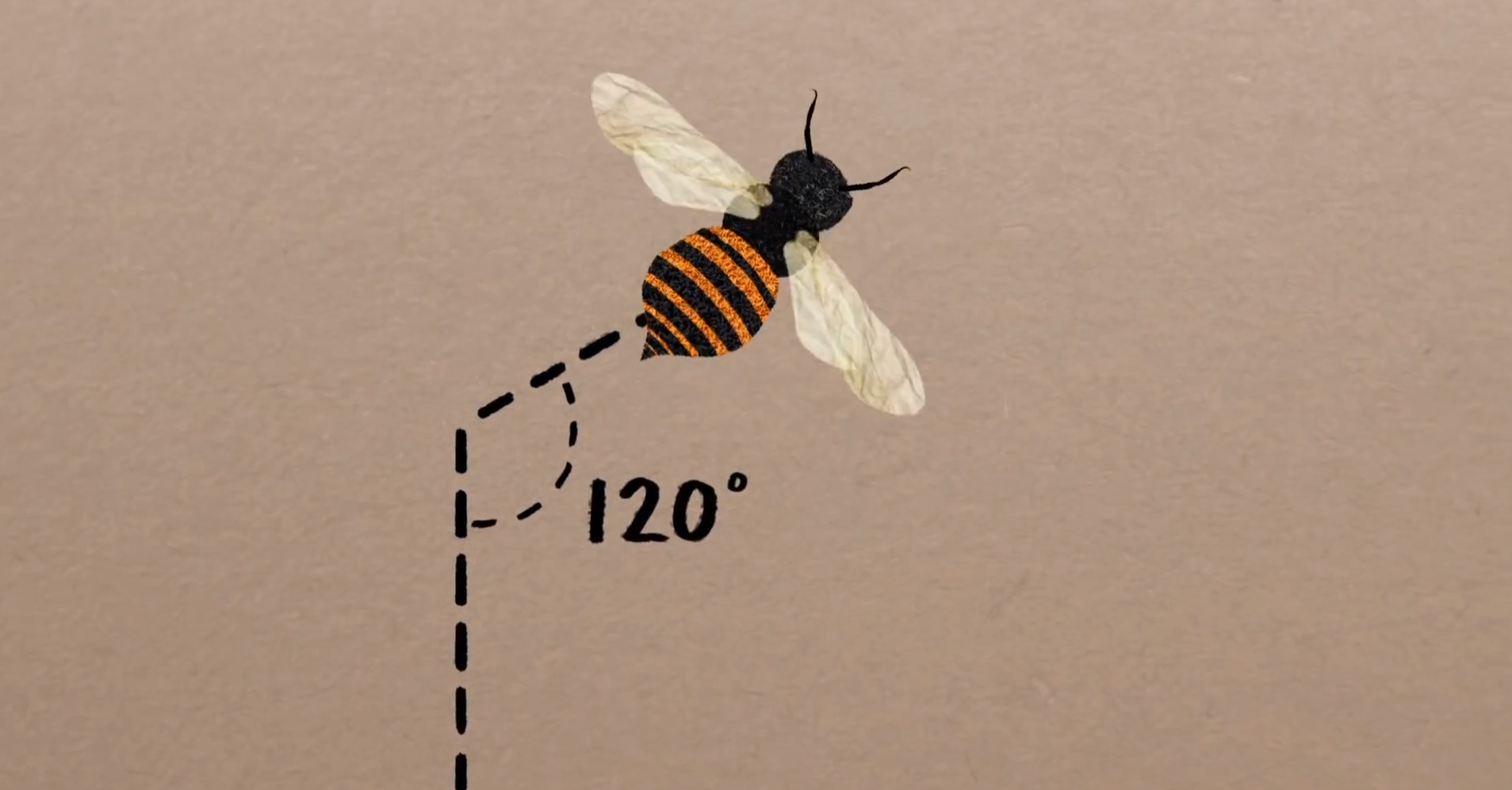
But, in addition to their incredible honey-producing skills, scientists claim that honeybees are excellent mathematicians. They can calculate precise angles and can even comprehend the roundness of the earth. Because the hive is so central to bees’ survival, they’ve learned to perfect the architectural design.
If you study a honeycomb, you’ll notice that it’s composed solely of hexagonal (or six sided) designs in wax. Bees have to consume 8 ounces of honeys just to produce one ounce of wax. So they don’t want to waste it. So why, of all the possible shapes, why do bees prefer these ones?
Find out in this video from TED-Education.






6 Comments
We need more Bees
Not evolution, the Creator’s perfect design.
Interesting presentation but in no way is it evolution! Bees are a beautiful example of Gods creation. Give God the credit for the design he made. The more I work and learn about Bees I am amazed at the work of God and his creation. When I teach this to kids I always point out Gods creation to them.
I read in a book that they actually make round shapes for their cells, but that the bees when building, they heat up the wax, let it cool down and it shapes itself like a hexagon.
The comb building process is described in “Huber’s New Observations Upon Bees” that was translated from the French by C.P.Dadant and edited by Michael Bush You can find it on Michael Bush’s website:
http://www.xstarpublishing.com/
This book is a description of the scientific method and the experiments that were undertaken to learn much of what is known about bee behavior today. What is even more amazing is that Francis Huber became blind at the age of 15. He had a beautiful personality and was able to get his wife, a servant, and even his daughter to help him with his experiments. His personality shines in this book. It is a beautiful read.
Any beekeeper can see by brushing bees off of a natural comb that is being built that the cells are hexagons from the moment the comb is started. I agree with Rick and Daryl that bees and all that they do is the handiwork of God. If evolution were a fact, why are people so worried about the bees? I mean if this just happened over time, shouldn’t some organism come along that does a better job of being a bee than what we have today? Why worry? If you believe in evolution, is not your concern about the bees a tacit admission that evolution really doesn’t happen?
We have a hive that has set up shop in the back wall of our wooden shed. Should we just leave it alone? They are not
bothering anyone. I was hoping they would eventually move on. Any suggestions?
Thank you!!