
Every beekeeper out there knows about propolis. That THICK STICKY resin bees use as cement. Talk about super glue! In warm weather, propolis sticks to your fingers or gloves during inspections. It gets all over your hive tool. It causes problems if you are taking notes. Your pencil sticks to your fingers. Your paper gets and yucky. In cold weather, propolis is like cement!
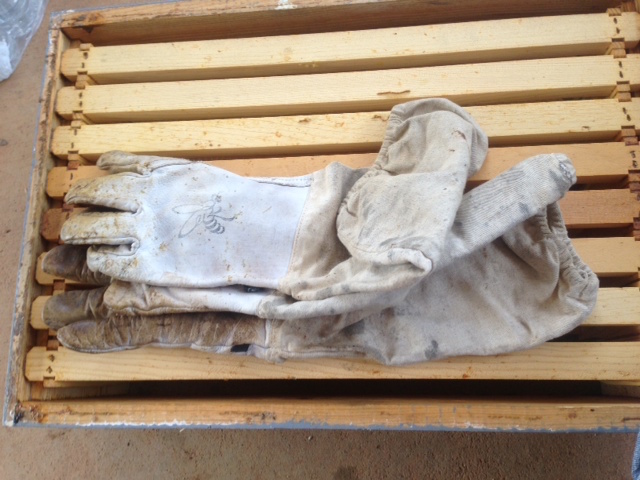
Propolis is a resinous mixture collected from tree buds, sap flows, or other botanical sources.
The bees mix the sap with some of their secret formula, probably wax and honey and they create wonderful sticky stuff.
It was once believed bees used propolis to seal the beehive to protect the colony from the elements. This theory has now been disproved.
Now propolis is believed to:
- reinforce the structural stability of the hive
- make the hive more defensible by sealing alternate entrances
- prevent diseases and parasites from entering the hive, and to inhibit fungal and bacterial growth
- prevent decay in the hive
- have health benefits for humans
Bees use the propolis to seal cracks inside the hive. When I move a Nuc into a the big hive, there is always propolis from top to bottom in the corners of the Nuc box.
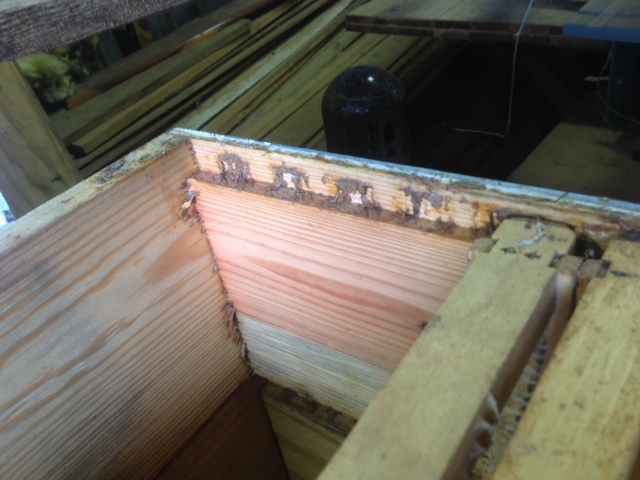
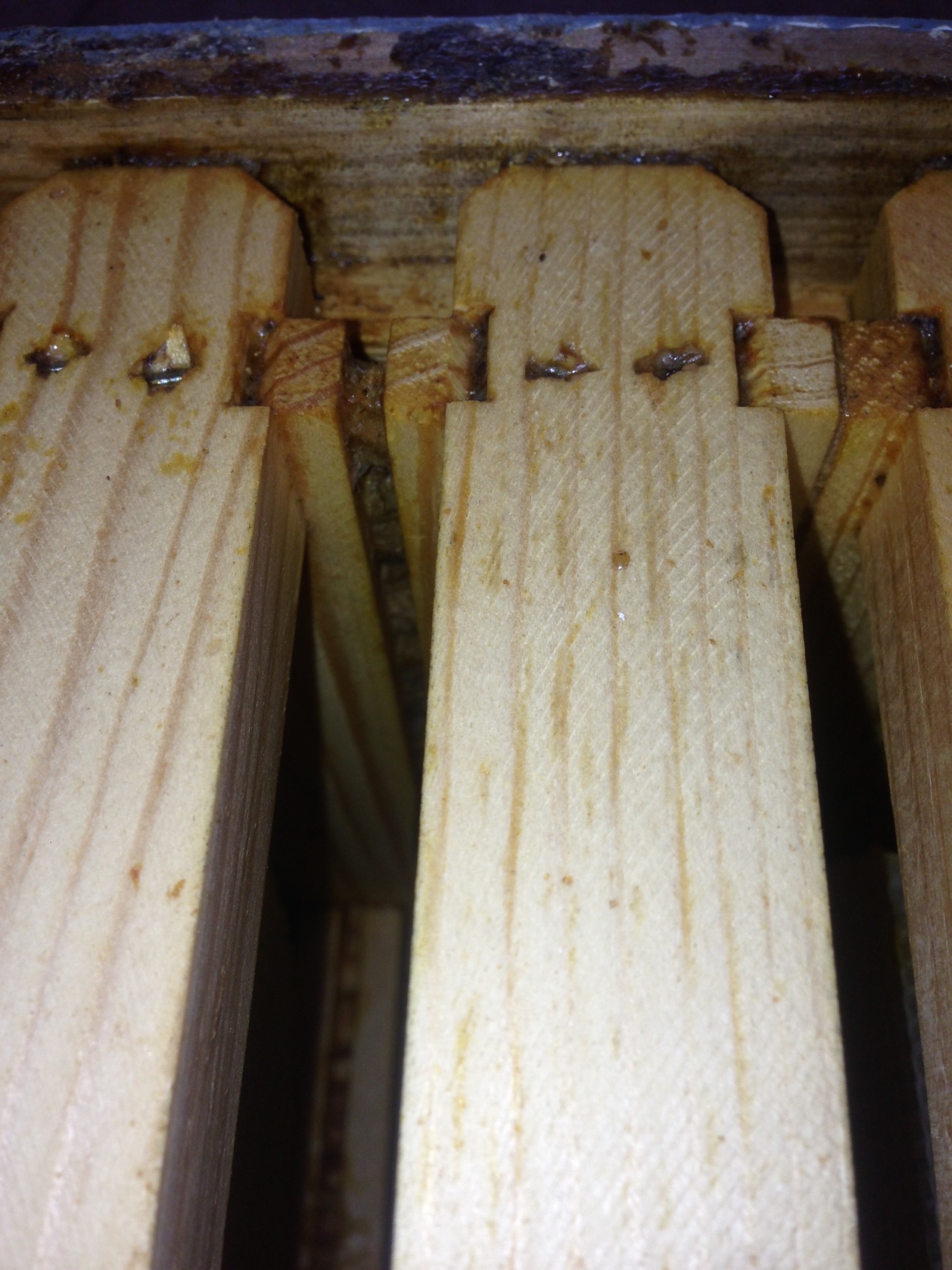
The bees use propolis to cement the frames in place and cement the hive boxes and supers together. This can be a small problem if you are like me and forget to make sure all the frames are pushed together and centered after an inspection. The bees will put the bee cement between the frames making it impossible to push together without taking the frames out and cleaning them. Now, I say cement because that is what it feels like I am dealing with! During the first venture into the hive in spring or between inspections, it feels like I need a jackhammer to move the frames and separate the hive bodies.
Now with that being said, we should never assume the propolis will be enough to hold the hive together if we decide to move it. I heard a story of a man helping a beekeeper move a hive one night. The beekeeper thought the propolis would hold it. The hive came apart as they were carrying it. The result was not pretty.
Last winter, my dad had a hive with an entrance reducer. The bees propolised all but a small hole the size of a pencil eraser in the entrance reducer. My dad keeps a close eye on his hives. He watched the bees close up the entrance, then he watched them remove the propolis. He watched them repeat the process a month or so later. We still do not have a reason for it.
I have observed bees keeping hive beetles corralled on the lid and other bees propolising them in. They will use propolis to seal off a wayward creature who may get into the hive and die and is too big for them to remove. This stops any disease that could spread in the hive.
Propolis has been used as a medicinal treatment for wounds and other ailments. It has been used as a dental sealant. It is used as an ingredient in chewing gum, cosmetics, creams and ointments. Just as honey and pollen differ from hive to hive and bee yard to bee yard, the medicinal benefits of propolis will vary too.
Propolis is another one of the unique products made by our fuzzy friends. It can be a pain to deal with in the inspection process but it is a necessary component to the beehive.






5 Comments
Thankful for you share ingot and passing on your knowledge..
thanks your info
Too little information regarding the functions of propolis within the hive, and the health benifits or the many medicinal uses of Propolis. This is an oft ask question by consumers at farmers markets, or honey sales tables around these days. I enjoy to share your articles on Facebook when they contain useful information worth sharing to the interested public. Keep up thw good works you so often do.
Thanks!
Max
I agree. Too little info. This is just a generalization that can be found in any bee book or magazine. It would be nice to read an article with some research into the chemical properties and medicinal uses/benefits.
Thank you,very informative