
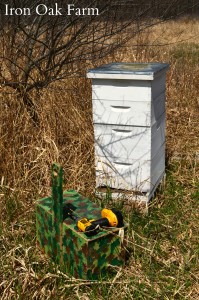
 Last year our colony was doing great! So well infact that we bought another hive thinking that our robust colony might split and swarm. We had an excellent honey crop the year before, and expected things to go just as well last year. Until we did an inspection in late summer.
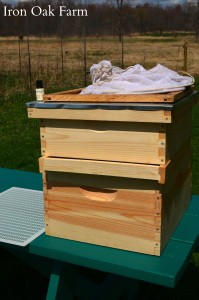 We opened the hive and found honey. Honey, honey, honey. At first we were excited! Wow, what a great crop! But as we moved further down the hive body, we found that there was ONLY honey. No brood at all and no queen cells.
Finding our hive in this state indicated that we might have a queenless hive. This means that somehow our queen died and the colony failed to make a new one before she passed. So the bees just kept making honey, honey, honey with no queen to lay eggs there was no brood to raise.
We did a thorough, tedious visual inspection to see if we could find our queen amongst the many workers, but we failed to find her.
We knew that we would need to find a new queen if we were going to save our hive.
We found a local bee keeper who has been raising bees for over 30 years. He was willing to sell us two queens. Upon his recommendation we might need a backup queen.
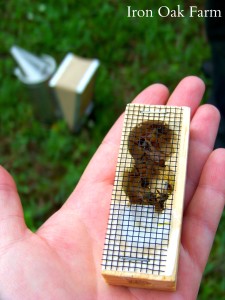 The queens came in small wooden boxes along with a few worker bees to tend to the queen’s needs. In the box there is a sugar plug so that once she is in the hive, the bees can slowly consume the sugar and release their new queen.
We opened the hive and introduced the first queen. The bees seemed to accept her and we hoped that when we opened the hive in the next week, she would be laying eggs and regenerating our colony.
In the mean time, we kept the backup queen alive by feeding her and the workers sugar syrup drips along the top of her box three times a day.
Unfortunately, the first queen didn’t make it. And after introducing the second queen, she didn’t make it either.
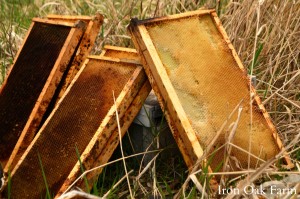 At that point, it was getting later in the year. The bee keeper we got the queens from was out of additional queens and we were forced to let our hive go. The bees continued to make honey, but slowly the workers died of old age and eventually the hive was empty. It was very sad.
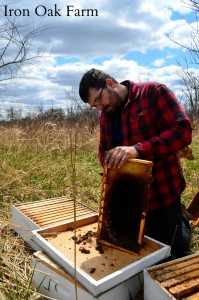 This year we are starting over.
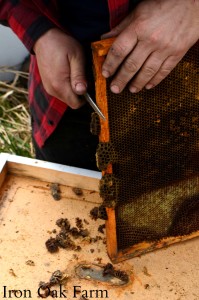 Our new package of bees are due to come in tomorrow and we are very excited to have a colony again.
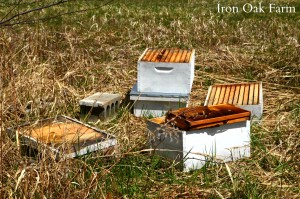 We cleaned up the old hive, removed the rogue comb,
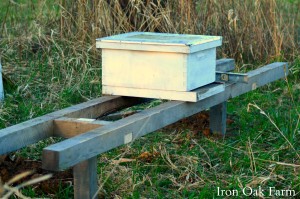 and built a stand for the bees. To learn how click here! Building a Beehive Stand
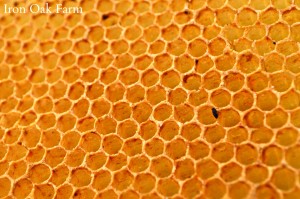 We left the wax comb from the previous colony to give this new colony a head start.
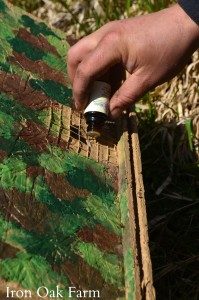 We also hung our swarm box baited with lemongrass oil. To learn more about building a swarm box click here. How to Build a Swarm Box
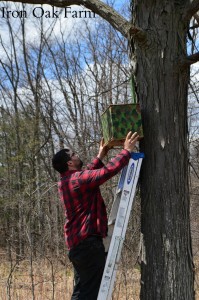 Hopefully we will catch an additional swarm and it can inhabit the second hive.
What are your plans this spring in beekeeping? Share your stories by leaving a comment below or visit the Keeping Backyard Bees Facebook Page.






8 Comments
Just started with a package myself..about a week and half in, on new foundation. Hive looks like the airport on a warm day, saw pollen of different colours coming in too. Did a brief feed check/remove the queen cage at the weekend, bees were festooning and building comb. Going in again in a couple of weeks to see if the queen is laying. Hard to sit on my hands and leave them alone!!
I needs to learn how to keep bees and produce the best honey.
I just want to start now.
Thank you for your education.
Fanus
Your story is exactly what happened to us. When we opened the hive this spring after a brutal winter the first two boxes were loaded with honey and about one third of our original hive. The brood box was empty and no queen.to be found. We are buying a nuc from our neighbor to be ready in June. Should we combine our existing small hive with the new one? Remove the frames of honey too? Debbie
Want to learn.
It appears you left comb from last conely that has spots of dysentery.
This is just of the reasons that it is always best to start out with at least two hives. If you had another healthy hive the queenless one could have been combined with the healthy one.
I have captured my first swarm in my trap. What is the procedure to move them to my apiary yard and then to a new hive? Thanks in advance!
My bees died last year I think they were poison how can I tell I found them they died where they were working