
That moist earthy smell of spring is here. I can smell it on my hair and my sweatshirt with the hood as I play fetch with the dog and check the maple syrup taps each day. The greenish, brown of the dead grass is slowly emerging from under the melting snow and the white painted beehives stand out like a beacon of warm weather hope.
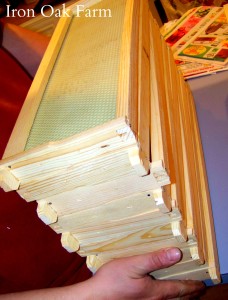 In the evenings, we’ve been assembling another hive in anticipation of our packaged bees to arrive the last week of April. The construction is methodical and satisfying as each frame is nailed together and placed with its mates in the new, empty hive box. I smell the wax coated foundation pieces and the honey smell reminds me of warmer days. I picture each hexagon indent filled with golden honey, and can’t wait to see the mass body of little, fuzzy bees humming over the cells.
For those of you just starting out in bee keeping, here is an overview of different frame types, different foundation options and the pros and cons of each.
 Frames
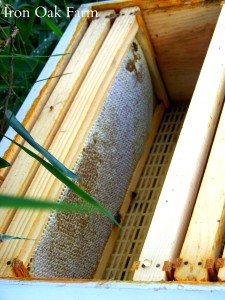
The hive frame for the Langstroth style hive is just what it sounds like. A rectangular frame where the bees create honey comb in the center. This style of frame makes it easy to collect and extract honey.
Manufactured frames are usually available in 4 sizes;
Deep 9 1/8 inch
Medium 7 5/8
Medium 6 ¼
Shallow 5 3/8
Other sizes can be also be found. For example, there is an extra shallow 4 ¾ and Dadant offers a super deep 11 5/8.
The size frames you choose for your hive depends on the size of your operation, physically how strong you are, cost, and how many boxes you want for each hive.
Often Deep frames are used for raising brood because brood comb is lighter weight. A box of deep frames filled with honey could potentially weigh over 100 pounds.
The size frame you choose from there depends on preference. Smaller frames weigh less, but hold less honey so you might need more boxes to fit your expanding bee hive.
Most honey extractors will hold all size frames, but many times the smaller frames have to be turned and spun again to get the honey from both sides.
Feeding Insert Frame
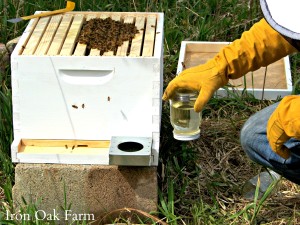 I saw these for the first time at our local feed store and thought it was a great way to feed bees. This frame can be filled with sugar syrup or honey and placed inside the hive box. In the past we’ve fed our bees using an entrance feeder but the mason jar needs to be checked regularly to ensure that it doesn’t freeze in cold weather, or sour in warm. It also tend to attract ants. We are planning on giving this a try this season.
Wooden VS. Plastic
Traditional frames are often made out of eastern or western pine. They are typically nailed together with frame nails. Wooden frames are easy to assemble, they are usually less expensive than plastic frames, they can be hand made and are a natural product which suit those that are concerned about chemicals contained in plastic.
Plastic frames are durable, light weight, don’t rot and are less porous than wood so they’re easier to clean. Usually they cost more than wooden frames.
Foundation Inserts
Some wayward comb building
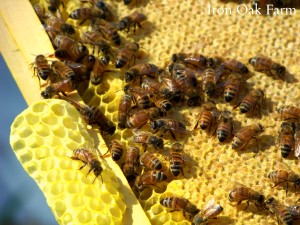
Foundation inserts are a thin sheet of plastic or wax molded into the hexagonal pattern of comb. The inserts are placed in the center of each frame. These inserts give a foundation to encourage the bees to build straight comb which keeps your hive organized and easy to extract.
To use foundation or not?
Some people choose not to use foundation inserts. They use a piece of established comb and attach it to the top of each frame. This gives the bees a starting place to begin building. Some of the draw backs of this method is that you don’t always get the uniformity to your frames and in warm weather sometimes the comb piece can be difficult to secure.
Foundationless frames are good for those that want to sell honey still in the comb. A section of comb and honey can be neatly cut out all the way through the frame.
Foundation Types
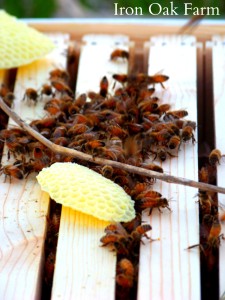 The foundation you choose depends on the size frames you have, how you want to extract your honey, climate and cost.
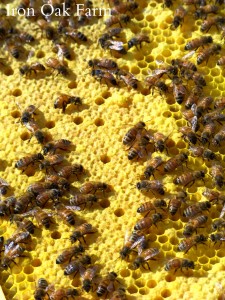 Plastic Uncoated Foundations are probably the cheapest option. The frames should be misted with a sugar syrup or a diluted honey solution to encourage bees to begin building comb.
Plastic Coated Foundations are dipped in beeswax. Bees usually respond very well to this style and we’ve found that the extra cost is worth it.
Black or White?
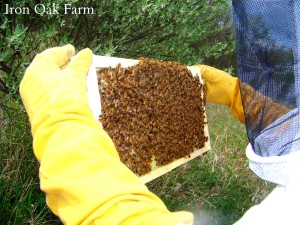 Plastic foundations come in two colors black and white. Traditionally all plastic foundations were only available in white, but over the past few years I’ve seen them offered in black. The black foundation makes it easy to spot brood eggs, which are white in color.
Wax Wired Foundations are sheets of molded beeswax supported by wire. These work well for all wax, deep frame sizes which are larger and need extra support.
All Wax Foundations work best for more shallow frames as these are lighter weight and might not need the extra support. They can also be used as brood frames which are lighter weight because they aren’t filled with honey.
Drone Foundations have larger hexogonal cells which encourage the rearing of drones.
What are your preferences when it comes to frame and foundation styles. Share by leaving a comment below, or by visiting the Keeping Backyard Bees Facebook Page.





12 Comments
Is it best to use white or black frames as a new beekeeper.
I started with plastic frames but have purchased all wood and will make the switch this spring. I find that small hive beetles easily hide in the slots on the side of plastic frames. This shouldn’t be a problem with solid wood.
I watched a seminar on raising bees Untreated & naturally, a few weeks ago( no suit, no stinging!),and learned that plastic off-gases and isn’t all that good for bees, and forces bees to an un-natural larger size; a setup for less healthier, more stressed bee. The presenter mentioned that bees try to keep the queen’s scent solely within the hive, that more opening, smoking the hive, disrupt the process of keeping the queen’s scent, and that the plastic does not help with its’ off-gassing. Wonder how long it would take to ‘age’ a plastic hive?
I don’t think I’d go plastic, after watching & learning, from that seminar.
Totally agree on a more natural approach. If you do use plastic foundation, perhaps putting them outside would dissipate some of the gases that are found in plastic. I don’t know how long ago the foundations may have been made. I personally like the natural way of giving the bees just a wooden frame and let them build themselves. Of course, the issue with evenness and the comb touching all sides can be trying…but I know that they built it and know the source of the wax…etc. If I would go plastic foundation…it would be in the form of a bare sheet….plastic, uncoated foundation but a side of me says how was the plastic made…bpa free?…etc.
This is Eva from China, we are specialized in manufacturing Bee products & Beekeeping tools, such as
1) Beeswax,
2) Bee Pollen,
3) Bee Propolis,
4) Beeswax Foundation,
5) Bee Hive,
6) Honey Extractor,
7) Bee Suit, etc
Please call me at 0086 13603848163.
New to plastic frames, and not sure if this is for me or not. Is it OK to mix a few plastic frames with my other frames (wax) to have something to compare them with. I plan on coating the plastic with my saved wax.
we had a few days of 40 to 46 degree days some of my wax honey foundation just about ready to extract melted and the honey ran out of the hive entrance so I have decided that plastic foundation is the way to go. any one else had this problem I live north of Adelaide South Australia.
I need wood frames and plastic coated foundation 50 med and 50 deep
Can I get and a price
Hello Lee,
We dont actually sell hives. We suggest looking to a search engine to help you find a bee supplier.
hi
I want to make my own beehive as you said, but you didn’t say the dimensions of the frame in the hive. Can you also provide information on how to create a frame please?
Thank you
I’m Just starting. This was a Great article for me to read.
I need the cost of wooden frame with wax foundation.
100 pcs