• Free Newsletter
  • Contribute
  • Advertise

Welcome to Community Chickens!
Sign Up for Your Free Newsletter!


  • Home
  • About
    • Free Newsletter
    • Contributors
    • Become A Contributor
    • Giveaways
    • Contact Us
    • Advertise with Us
  • Bees
    • Bees 101
    • Beginning with Bees
    • Breeds of Bees
    • Hive Hiearchy
      • Queens
      • Drones
      • Workers
    • Why Bees?
    • Buying Bees
    • Health & Disease
    • Swarming
    • Bees & Law
    • Pollinator News
  • Equipment & DIY
    • Plants for Pollinators
    • Hive Types
    • Hive Plans
    • Equipment
    • Predator Control
    • Video Tutorials
    • Product Reviews
  • Hive Products
    • Honey
    • Pollen
    • Wax
    • Health Benefits
    • Recipes
    • Storage & Usage
  • Podcast
  • Ask a Question
  • Shop

Early Spring Nectar and Pollen Sources For Bees

By Claire Jones on February 12, 2017 Visit TheGardenDiaries

Share this:

  • Facebook
  • Twitter
  • Pinterest
  • Print
Plant These For Bees Poster at TheGardenDairies

Plant These For Bees Poster at TheGardenDairies

Here in the mid-Atlantic in Maryland, we have had a mild winter with at least a dozen days since early December above 50 degrees. That means flying bees looking for early spring/late winter nectar and pollen in the landscape… and they are coming up short. Unless you plan ahead and plant perennials and trees that will bloom very early and which bees are attracted to, you might end up with starving bees.When mild weather occurs in winter, bees are using up their stored honey at a faster rate than if they were in deep hibernation, so contrary to popular belief, bees are more likely to starve in mild winters than really cold ones.

Erica x darleyensis 'Mediterranean Pink'

Erica x darleyensis ‘Mediterranean Pink’ blooms all winter long

A bumble bee on heather

A bumble bee on heather

That is why your choice of winter blooming plants is so important for honeybee survival as well as other native bees. My top 5 early blooming plants for bees are Winter Aconite, Snowdrops, Heather, Witch Hazel, and Winter Jasmine.

My cheery yellow Winter Aconites (Eranthis) have been blooming off and on since January. When a mild day comes around, they open their flowers and the bees flock to them. If we get colder temps, they close up and wait for warmer weather.

Winter Aconites will bloom through snow

Winter Aconites will bloom through snow

Flowering Winter Jasmine covers a sunny slope in January

Flowering Winter Jasmine (Jasminum nudiflorum) covers a sunny slope in January

As snowdrops start blooming in the mid-Atlantic and elsewhere, honey bees are actively increasing their colony population to build up for spring foraging. Populations are low in the winter, but can increase rapidly as soon as temperatures rise and flowers continue to open.

Hanging heads of snowdrops full of golden orange pollen and nectar are usually the first harbinger of spring. Bees are looking for pollen to make into bee bread to feed their developing brood. This gives bees and native pollinators a fresh source of nectar and pollen in late winter before spring has officially sprung. In some locations, this may be the only food source available to them at this time of year.
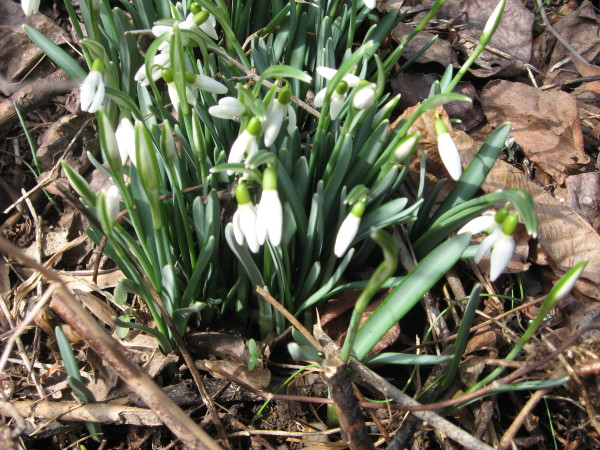
Snowdrops

Snowdrops

Dandelions, the scourge of  lawn warriors is also a big player here. Encourage your dandelions to bloom and hold off on the weed killers! And once your pussy willows bloom, there should be enough forage for bees to be on their own until fall.

 Dandelions are an excellent early spring foraging plant


Dandelions are an excellent early spring foraging plant

Pussy Willows (Salix) are early shrub bloomers that bees flock to

Pussy Willows (Salix) are early shrub bloomers that bees flock to

A pussy willow catkin is blooming for a foraging pollinator fly

A pussy willow catkin is blooming for a foraging pollinator fly

Honeybees bringing in orange pollen which is a necessary protein to growing brood

Honeybees bringing in orange pollen which is a necessary protein to growing brood

Witch Hazel is one of the first shrubs that bloom in the spring

Witch Hazel (Hamamelis) is one of the first shrubs that bloom in the spring

Tags

  • bee foraging
  • Dandelion
  • feeding bees
  • food for bees
  • foraging for bees
  • heather
  • hive build up for spring
  • nectar in spring
  • pussy willow
  • snowdrops
  • whitch hazel
  • winter aconite
  • winter flowers for bees
  • winter pollen and nectar

Related Posts

 
Bees, Bees 101, Buying Bees, Equipment & DIY, Hive Plans, Hive Products, Hive Types, Video Tutorials,

DIY Hive Stand – Video Tutorial

 
Bees, Equipment,

Winter Survival for Bees

 
Bees, Hive Plans, Hive Types

When to Add a Harvest Box

 
Bees 101, Product Reviews

WHAT TO DO WITH THAT HOLIDAY BEEKEEPING KIT

 
Bees, Breeds of Bees, Buying Bees, Earn Your Stripes, Equipment & DIY

9 Tips When Selecting Honeybees

Leave a Comment

  Cancel Comment

2 Comments


  • John says:
    February 13, 2017 at 5:38 pm

    Where to buy the winter flower seeds for feeding on your email

    Reply
  • mary says:
    March 31, 2018 at 2:21 pm

    I came across a good website share for bees http://www.sunflowerproject.org please share

    Reply


      • Connect with Us

      • Get Our Free Newsletter!

        Subscribe to Grit

      • For more than 130 years, Grit magazine has helped its readers live more prosperously and happily all the while emphasizing the importance of community and a rural lifestyle tradition.
      • Subscribe today!

        Popular

      • Pricing Your Honey
      • The Great Sunflower Project
      • Keeping Hardier Bees
      • 8 Proper Beehive Placement Tips
      • Extracting Honey Without an Extractor
      • Recent

      • DIY Providing Water for Bees
      • Garden Plan for Attracting Pollinators
      • Hive Inspections During Dearth + Video Tutorial
      • Establishing a Successful Bee Garden
      • Top 7 Reasons for Cranky Bees


    Delivered by:

    Mother Earth News Grit Community Chickens
    Copyright © 2026, All Rights Reserved | Privacy Policy | Terms of Use | Ogden Publications, Inc., 1503 SW 42nd St., Topeka, Kansas 66609-1265
    • Home
    • About
      • Free Newsletter
      • Contributors
      • Become A Contributor
      • Giveaways
      • Contact Us
      • Advertise with Us
      • Back
    • Bees
      • Bees 101
      • Beginning with Bees
      • Breeds of Bees
      • Hive Hiearchy
        • Queens
        • Drones
        • Workers
        • Back
      • Why Bees?
      • Buying Bees
      • Health & Disease
      • Swarming
      • Bees & Law
      • Pollinator News
      • Back
    • Equipment & DIY
      • Plants for Pollinators
      • Hive Types
      • Hive Plans
      • Equipment
      • Predator Control
      • Video Tutorials
      • Product Reviews
      • Back
    • Hive Products
      • Honey
      • Pollen
      • Wax
      • Health Benefits
      • Recipes
      • Storage & Usage
      • Back
    • Podcast
    • Ask a Question
    • Shop