

Feeding Weaker Hives
If you have several colonies of bees in your yard, feeding a weaker hive during a dearth can set off robbing – which can totally wipe out weaker hives. One solution is to use an “open feeder”. This is a super easy DIY project and all you need is a plastic pail with a snap on lid and a drill.
Using Pails
I get some pails from a friend in the wall paper business and thoroughly wash them 2x before using them for feeding bees. You can also get food grade plastic pails from the bakery department at most grocery stores and sometimes they are already washed for you. Most of the time they are happy to give a few away rather than trash them. I’m a big believer in recycling and repurposing materials. So any time we can reduce the carbon footprint we should seize the opportunity.
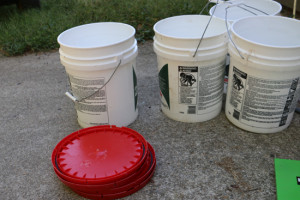
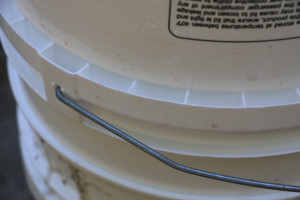
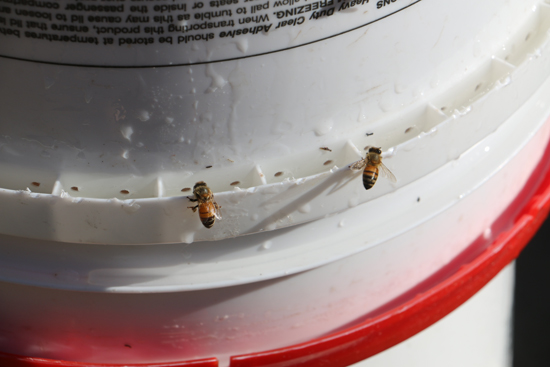
Look for pails that have a lip that runs around the entire pail near the top. This lip will have little divider walls. This is very important. Without the lip, the feeder will not work. See the picture for details. Using a 1/8” drill bit, drill 1 -2 holes all the way around the pail just inside the lip. Then just mix your sugar feed water and fill the pail as high as possible without it leaking through the holes you just made near the top. Snap the cover on tight all the way around, then take it anywhere within 30 feet of the bee yard and turn it upside down on a flat surface.
Sugar Water
Some sugar water will leak out at first and you might get a little bit on yourself so a quick flip should minimize any excess splashing. It will only take a few seconds for the natural vacuum seal to take effect and then you can walk away and let the bees discover the all you can eat buffet conveniently placed near their neighborhood.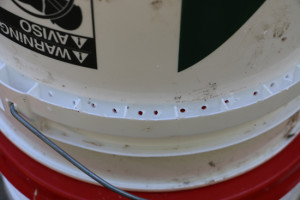
Feeding More that Your Hives
Keep in mind that open feeders may also attract other bees from other apiaries within a few miles of your hives. They may not find it as soon as your bees do, but it’s just something to think about if you happen to live in close proximity of another bee yard.
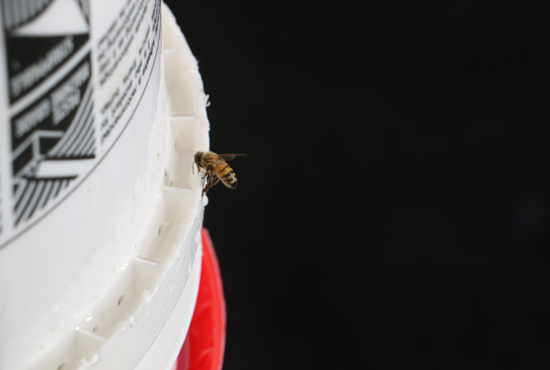
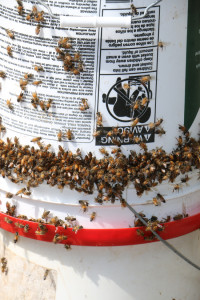
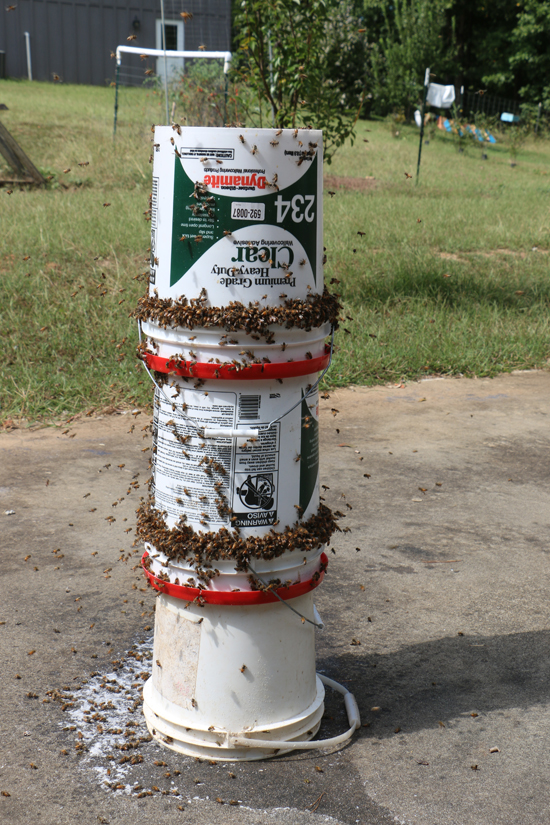
I generally use the open feeders during dearths as I mentioned earlier, but I know other beekeepers that use them spring, summer and fall. Open feeders are nice because they are easy to make and you don’t have to worry about drowning which bees seem to be really good at when it comes to feeders, and you can feed a lot of colonies at once. I usually have to refill the 2 open feeders I keep in my yard of approx 40-50 hives every 2 days just to give you an idea of how fast they can consume the sugar.
As a rule, I never feed if my bees have enough stores. This year we had a really HOT and dry summer and almost 1/2 of my colonies ate up most of their stores by October so I placed the 2 feeders near the yard and kept them going the entire month or so right before it started to get cold in my climate.

Enjoy Beekeeping!






9 Comments
I like this idea, but I would think this could be an open invitation for Yellow Jackets. They are a big problem here in southern Ohio.
HeavyD, there are a number of wasp trap designs that can be made from a soda bottle, on the ‘net. You bait it with a bit of meat, the yellowjackets will go for that rather than the syrup. Place it away from the syrup and the hives.
Love this Gene! Great idea. But wanted you to know that Google Ads pastes a LOCAL EXTERMINATOR ad right over the top of your video!!!!!!
I don’t know how to report it, but Google should be ASHAMED!
Great idea, and I did something similar last fall with a large hummingbird feeder. But then I was told by an experienced beekeeper that open feeding can create a feeding frenzy that would impact people using the area (which it did, but was easily remedied by moving it to a remote area of the property), and also allow diseases to be spread. Any truth to that latter concern?
Where can I find 55 gallon drums of sugar
Great site
Yes Hello, i was wondering if the bees would do good around bamboo , is is harmful or beneficial for them? I know they do explore and travel great distances but never seen them around bamboo. Trying to get started with this and researching all avenues but will have a hive, soon. Thank You
Nice project and great video description. Just wondering if you had problems with ants finding their way into the feeder? Would it help to add a little vegetable oil to the lip of the bottom bucket that supports the feeder?
very interested in starting to do backyard bee keeping