
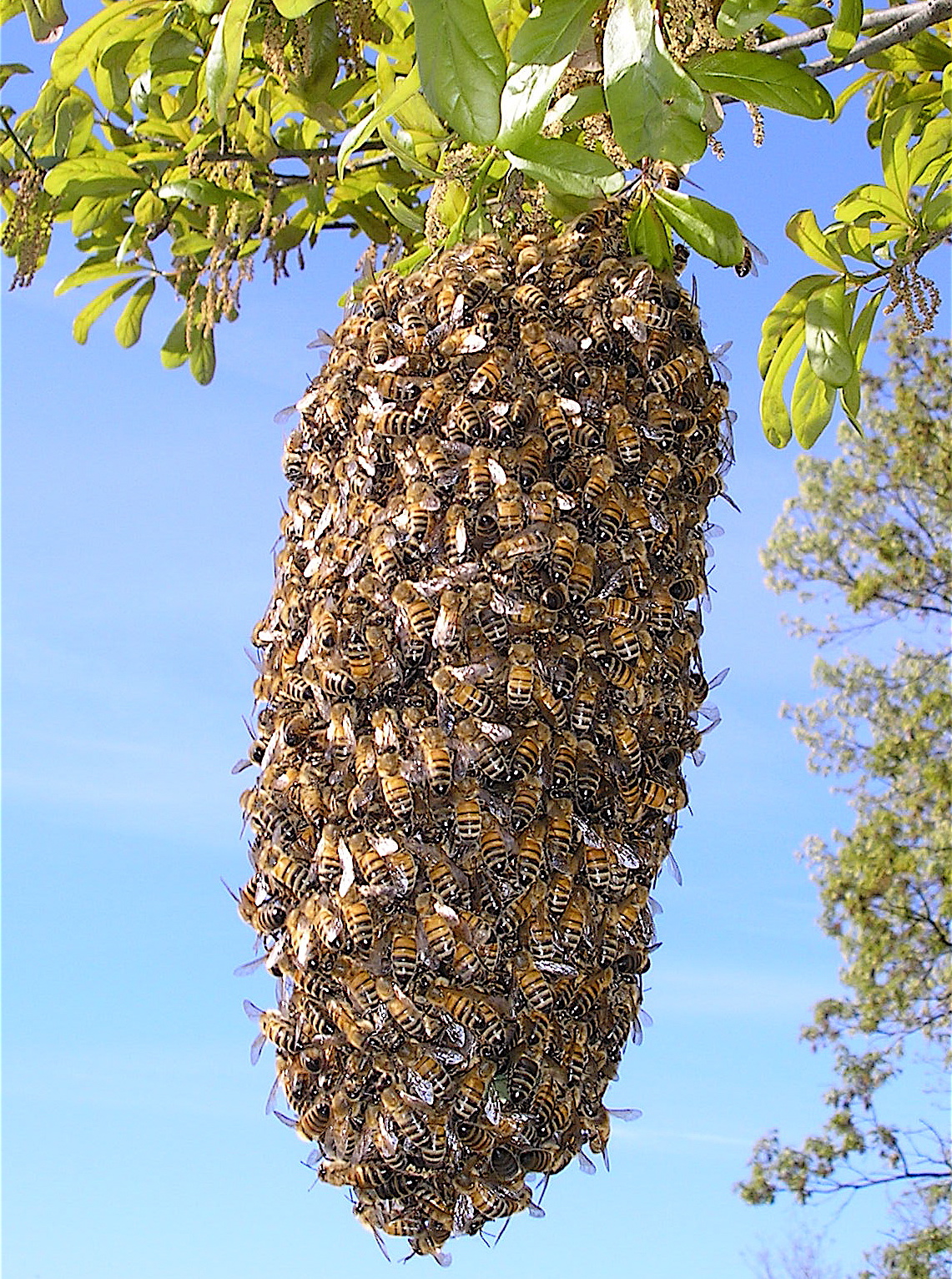
 Capturing swarms is a very exciting way to get more bees for your apiary and it’s much easier than you may have realized. The reason that it is generally easy is because when bees are swarming and have clustered themselves on a low branch in a tree or bush, they only have one thing on their mind. Get into a new house! Bees are not in an aggressive state since they do not have a hive, brood or food stores to defend, so placing them into hive is usually a very simple process.
You’ll usually find swarms when there is a strong honey flow during mid morning, and most often after it rains the night before. I’ve walked out in my own yard on such mornings and occasionally find a swarm on a branch. When you do see a swarm clustered on a branch, keep your own personal safety as priority #1. I usually pass on the swarm if it requires me to hang off a high tree limb or work any higher than my 6’ step ladder can reach. I suggest you do the same. It’s not worth falling and getting injured over. But very often the bees will be easy to reach and then you can quickly relocate them into one of your own hives.
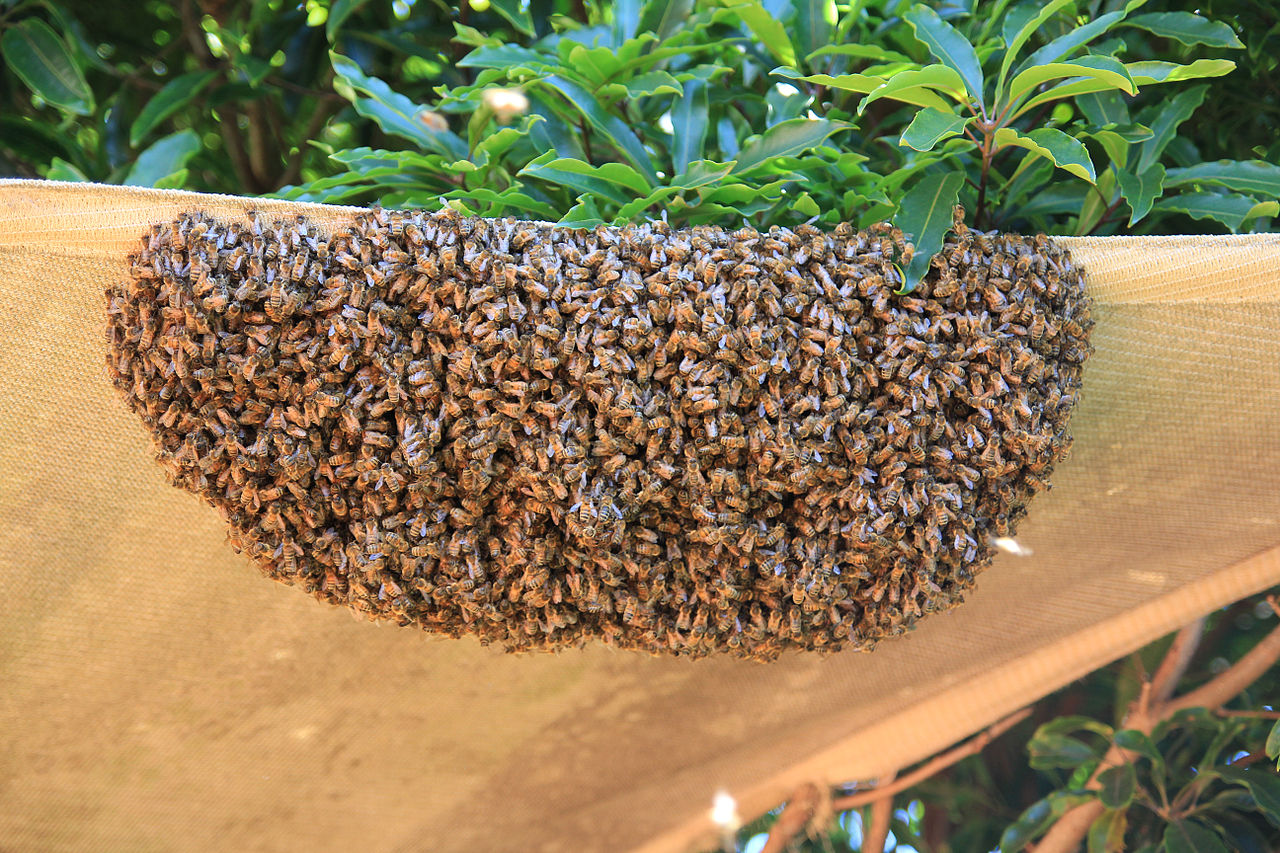
Here is what you need to do. (1) Get an empty hive body with some frames of wax foundation or drawn comb if you have it and (2) place it just below the branch the bees have swarmed onto. (3) Move the branch over the top of your hive body and (4) give it a quick shake into your hive. (5) If you have the majority of the bees in the hive, put a cover on it as quick as you can and set it on the ground next to the branch where you found the swarm. (6) If you shook the queen into the hive, the rest of the bees will begin to fan their wings alerting the rest of the swarm to enter the hive entrance to join the colony and queen. This generally takes :20 minutes or so. If you did NOT get the queen in, the bees will re-cluster onto the same branch and if that happens, just repeat step 4-6.
Once your bees have settled for the most part, just move the new colony into a nice spot in your apiary and set them up with some 50/50 sugar water feed. There’s no better house warming gift than a free meal to encourage the new colony to make this their new home. Check out the video version of this short article to see how it’s done or visit www.enjoybeekeeping.com for more info.






9 Comments
im very interested but not much money . so how can i get started ?
How can I get used Hives or Bee Boxes.
Re both comments…
Check Craigslist or your local beekeepers association. There’s almost always someone selling their excess equipment or getting out of the game. 🙂
Good luck!
the swarms I’ve captured from bee trees or removed from structures don’t want to stay hived .Ive tried old foundation, honey frames , even sealed brood . For what ever reason , they are showing a strong dislike for the bee boxes . Any help or ideas would bee very appreciated Okie-bee
Richard L.
Try putting a entrance guard with excluder on the hive for a couple of weeks. It works for me. If the queen isn’t mated yet only use it for three days.
I lost my hive earlier this winter likely in November or December. Living in Connecticut I cannot purchase a nuk until late May or June. When I put the girls to bed for the winter had Around 100 pounds of honey. I likely we have quite a bit of stores left, can I purchase my bees early spring given the amount of stores that should be left?
You are so generous with sharing your knowledge. Thank you very much!
Once the colony is in the new hive, do you have to put in a new queen?
Enjoying the interesting articles and advice about caring for bees in your own backyard I am a beginner and in the middle of making a home for the bees on my back veranda where I live the winters are cold so the girls will have access to the gardens thru pvc tubbing because the veranda is partly closed in