
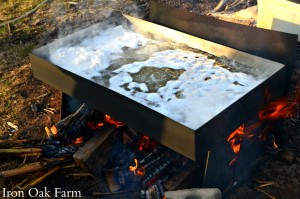
 The snow has finally melted and we’ve been enjoying warmer temperatures here in Michigan. The days are around 50 degrees and the nights hover around freezing. We just finished our maple syrup boil for the year and got 9 and a half quarts from 55 gallons of sap. It’s such a small yield considering what we started with, but the sweet syrup is worth the time and effort.
Another source of sweetness on the farm is of course our raw honey.
We’re still enjoying the jars of golden honey from last fall’s harvest. The bees have been occasionally active on the warmer days. We haven’t opened the hives yet to see how everyone faired over the winter, but we’ve set out some supplemental feed just in case.
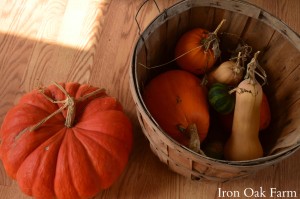 At this time of year I’m anxious to get in the garden. I just cleared our growing shelves of the winter squash that we harvested last fall. (We still have perfectly edible pumpkins and squash.) to make room for seedling starts.
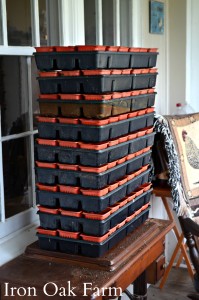 I plan on getting some flats going this week.
Each year we visit a local nursery for their half off seeds sale. This year I’ve decided to designate some space in the garden for plants that benefit our bees.
Here is the diagram for our 2016 garden. As you can see the first two boxes as you enter the garden gate will be designated for flowers. This is where I will incorporate the bee pleasing plants.
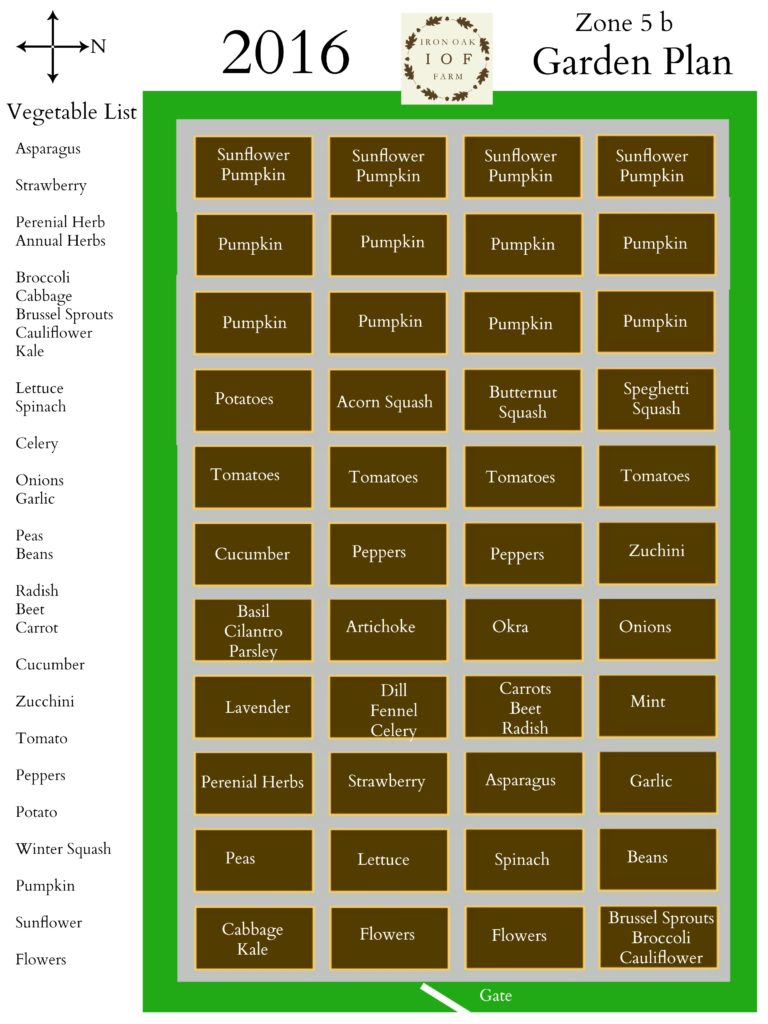
Along the back of the garden I plan on having a wall of sunflowers that will tower over everything and hopefully shine like a beacon to our bees, calling out “Here’s the garden guys!”
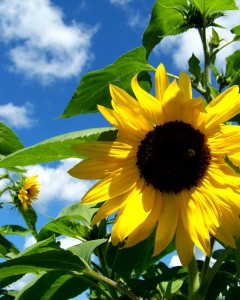 We always plant Lemon Queen Sunflowers which are extremely beneficial to bees. But this year I’ve also added several other varieties. For more information on planting sunflowers for bees check out my post The Great Sunflower Project.
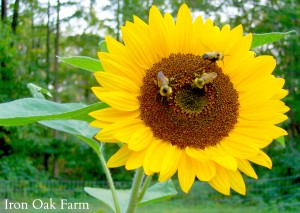 Sun Flowers– It doesn’t just have to be the Lemon Queen variety, bees appreciate all species of sunflower.
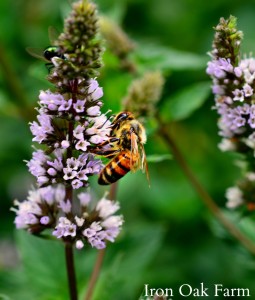 The Mint Family– There are dozens of mint varieties to choose from. My favorite mint is Chocolate Mint. The deep green foliage with burgundy stems smell like junior mint candies and makes a delicious tea. We also grow Orange Mint and Ginger Mint. Bees are attracted to any of the flowers from the mint family which also include Peppermint, Spearmint, Wintergreen and Catnip
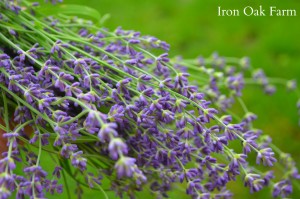 Herbs- Many herb flowers attract bees like Lavender, Oregano, Thyme, Fennel and Dill
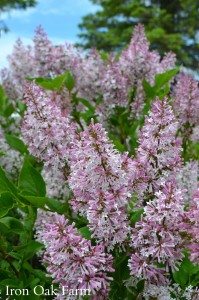 Flowering Bushes– Like Lilacs and Butterfly bush will draw swarms of pollinators. My lilac bush in the springtime “humms” with the sounds of bees, wasps and butterflies.
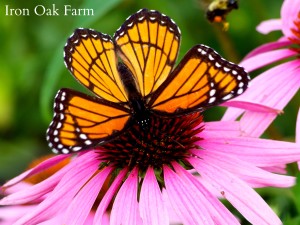 Wilflowers– Coneflowers, thistle, clover, chamomile and goldenrod make bees very happy.
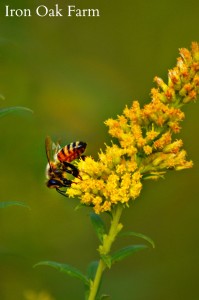 Goldenrod honey is dark rich in flavor. Check with your garden center to see if there are native varieties for sale that you can plant.
You might already have some of these growing wild on your property. You can help the bees by letting these flowers grow naturally and cutting back on your lawn space.
Scented Flowers- The sweet perfume that makes some flowers so enjoyable acts like a neon sign to bees! It says “My nectar is better and sweeter than those other plants.” Flowers like Jasmine, Carnation and Honeysuckle.
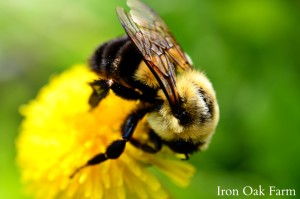 Yellow Flowers– Bees are attracted to the color yellow more than any. Another reason to leave those Dandelions be on the lawn.
Bee Superstar Plants- There are a few varieties that stick out especially well when it comes to attracting bees.
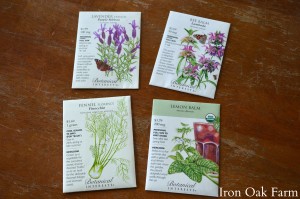 Bee Balm-in the mint family, the oils of the plant can be used to calm insect bites.
Lemon Grass-Lemon grass is so attractive to bees that the essential oil is often used to bait swarm traps. The scent lures bee swarms looking for an ideal home. (For more on this check out my post How to Build a Swarm Box)
Sweet Alyssum-Emits a honey scented nectar that really brings in the bees.
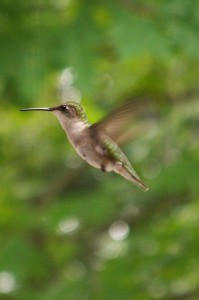
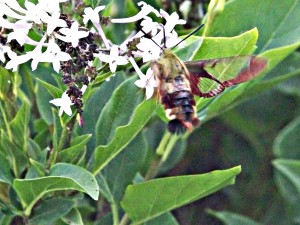 The nice thing about planting a garden that encourages bees is that it will most likely encourage other pollinators like Hummingbirds and Butterflies.
A few things not to do:
Don’t expand the size of your lawn. Lawns are bee wastelands. Most of the time, we cut our lawns before they have a chance to flower. And yes, grass will flower if left to grow. The flowers don’t look like traditional flowers we may think of, more like kernels or spikes. Think of wheat grains.
Don’t use pesticides. If it kills problems insects, it will kill bees too. Most don’t differentiate.
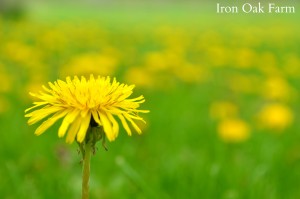 Don’t remove the Dandelions- Dandelions are an incredible source of early food for bees. It’s one of the earliest blooming flowers and appears right when the bees are hungriest, after the long winter. Dandelions are one way to make your lawn useful.
Here are a few Bee Specific Seed Mixes you can plant in your yard.
Botanical Interest Save the Bees Seed Mix
Eden Brothers Pollinator Wildflower Seed Mix
Johnny’s Bee Seed Mix
You don’t have to designate a huge garden area to help out the bees, but a few plants tucked here and there will draw pollinators to your yard, and will benefit the look and productivity of your property.





13 Comments
I love your articles! What size are the raised beds in your garden? I am designing my new raised bed garden and my first hive will be the centerpiece of it. I will seed the paths with clover and my Indian runner ducks will have the run of the place to help keep pests down. Keep the great Info coming!
Thank you so very much! Our beds are 3 feet by 6 feet. That’s a great idea, ducks won’t scratch up the place. Nice!
As always we look forward to your useful information! Happy Gardening and Bee keeping.
Thank you! Much happiness to you as well! 🙂
I love your website so much! I have bachelor buttons and larkspur growing wild in my front yard and back yard. Both the bumblebees and the honey bees make use of these blossoms all season time until the frost kills the plants back to winter time.
Are you familiar with the Savannah Bee Company that makes wonderful calming cosmetics from honey and bees’ wax?
Beautiful! I am familiar with their company! Thanks for sharing. 🙂
I live in zone 11b. I need to know which pollen/nectar sources grow well in the heat of summer.
Thank You!!
We are almost in 1 year to helping the Bee’s. We have had 3 mentors thus far and Gene Rene of Enjoy Beekeeping and your write ups have truly been the most useful to date. I have decided to start keeping my Girls in the Slovenian Bee Hives. My boxes have arrived I can’t wit till my girls from Gene come in May. Two weeks ago Tony and I caught our first Wild Swarm of bee’s from our neighbor over 12lbs! These girls are healthy and strong we have already had to add another box after just 2 weeks! So we now have 3 traditional hives, Gene’s organic Bee box, and 2 Slovenian hives to move into and we are constantly planting for all the Pollinator’s Bats included! When our new Bee house is built we will be able to sleep above ort girls and catch the Buzz The Bee Buzz that is!
Would like more info on how i can help with the population
Hi Jennifer, Just wanted to say nice article, nice pic of a hummingbird moth and I don’t believe I saw borage in your flower lineup for bees. They’re prolific nectar producers and easy to grow…
Stay safe and take care…
Brett
Very interesting and just as we will begin our garden planning it’s appropriate. Thanks
Great article! We live in south Florida and our bees love Jamaican Caper, wild coffee, firebush, and others. People should google what bee plants grow best in their climat.
Don’t forget the trees though! One tree will feed a whole lot more bees than flowers will. Bees will focus on one food source at a time, so a blooming tree makes it easy for them to forage all in one spot, work less, and live longer. You might consider planting trees on the west side of your house to also keep the house cooler in the summer months.
I’m new to your site but I really enjoy the content.