By Kim Flottum
Spring is early in the south this year. Swarms have already left the building in the southeast so they can only hope there’s enough food to keep them going. If you catch a swarm this month down there, pay special attention to food. There may be enough out there, and there may not be. You can share frames of honey from one of your other colonies if you have some, and honey is always the first best choice. But of course they’ll need protein too, and that’s pollen. If it’s coming in they may be OK in that regard. And, since they thought it OK to swarm in the first place, there much have been a lot of available pollen in the environment outside to give them the confidence to swarm in the first place. But keep an eye on them since they are at their most vulnerable right now.
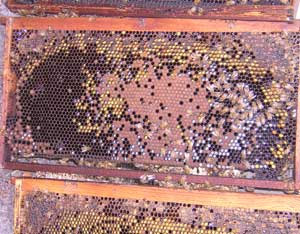
If your colony has a good mix of open and sealed brood, you are ahead of the swarming curve and can prevent the colony from leaving. Photo by Kim Flottum .
There’s more you can do. Certainly supply drawn comb if you have some, no matter what kind of box you are putting them in. One advantage of Lang hives is the interchangeable parts and pieces. If your top bar hives are from different suppliers the drawn combs or top bars might not fit. If that’s the case take a comb from an established hive, cut it to fit the new box and hold it in place with rubber bands. The bees will eventually fasten it to the top bar, and in the meantime, you’ve given them a place to store food, and for the queen to start laying in right away. Remember, it’ll be at least three weeks before any new young come along to replace the rapidly diminishing population that made the trip in the first place.
But if there’s not enough food, or it rains for a week you’ll have to step in and help them out. Most common is a 1:1 sugar syrup feed in any of many kinds of feeders…on top, out front or inside. You can use fondant if it’s available. It’s more expensive than just sugar, but it’s a lot easier to feed. Put a two or three-pound slab right on the top bars, add a super to accommodate the extra and replace the covers. If you have a top bar hive, use the divider board and rubber band a slab onto it, and slide it right up to the cluster. They won’t have to go below to get it from a feeder.
Keep feeding until they are well established and there’s a steady supply of food. You might want to feed even a bit longer, just in case. It’s good insurance to keep them healthy and happy.
Most swarms will supersede the queen that left with them. After all, she’s at least two years old and beginning to wear out. You can let the bees do it, and it’s the right time of year for the new queen to find lots of drones to mate with. Or you can requeen with known stock. Lots of attention is being paid to getting queens from local producers with a rep of having bees tolerant or resistant to Varroa mites and other diseases. Either way, your swarm will be better off with a new, ambitious queen raring to go.
If it’s still winter where you are, and it is where I am, you have time to engage in some swarm prevention. As soon as it’s warm enough to safely expose bees and brood…over 60F for a couple of hours anyway…take a look inside. Note the population, how much open brood if any, how much seeled brood, if an and how much stored food.
If there’s what appears to be a normal amount of all of these you are in time and can circumvent any swarm activity by making divides or other management techniques. If you find no open brood and only a small amount of sealed brood, you’re late, and more drastic measures need to happen. Stay tuned for Swarm Management, the trickiest part of your Second Season.